How to Build a Color-Coded Microfiber Towel System for Commercial Cleaning
Most cleaning teams do not have a towel problem. They have a control problem disguised as a towel problem. This guide shows how to build a color-coded microfiber towel system that crews can follow, supervisors can audit, and buyers can scale.
I’ll say the quiet part out loud: a lot of commercial cleaning operations pretend they have a system when what they really have is a closet full of random blue, red, and yellow cloths bought on price breaks, with no fixed par levels, no retirement rule, no laundry discipline, and no clue which towel touched a toilet two hours ago.
And then they wonder why training never sticks?
That is the first mistake. A color-coded microfiber towel system is not a rainbow. It is a control framework. The color is only the visual shortcut. The real system is zone mapping, fabric spec, replenishment math, laundering logic, and supervisor enforcement. CDC’s March 19, 2024 guidance is direct about this: different colored cloths should be used to prevent cross-contamination between areas. And the wider infection-control case is not soft; WHO says around 1 in 10 patients is affected by healthcare-associated infections, while WHO’s 2024 IPC summary of the CLEAN Group Consensus says environmental surfaces may contribute to 20% of HAIs. Read that again, slowly. CDC’s 2024 cleaning guidance, WHO key facts, and WHO’s 2024 IPC summary are all pointing the same way.
Here is the part vendors usually skip.
Table of Contents
The best recent proof is not a brochure claim. In the 2024 Australian CLEEN randomized trial, better cleaning and disinfection of shared equipment cut HAIs by 34.5% relative to control; the control phase saw 433 confirmed HAI cases in 2,497 patients, versus 301 in 2,508 during the intervention. That was not magic, and it was not expensive robotics. It was dedicated cleaning time, education, audit, and feedback. In other words: discipline beat improvisation. PubMed’s abstract of the 2024 CLEEN trial and the NSW clinical summary are worth reading before anyone tells you color-coding is just “nice for training.”
And one more thing.
If you plan to market “anti-bacterial” or antimicrobial towels into commercial cleaning, stop playing cute with the wording. EPA’s December 2024 Label Review Manual says treated article claims are limited to protecting the article itself; once the claim drifts toward protecting users or public-health outcomes, you are entering a different regulatory lane. I see too many towel listings blur that line. That is lazy, and in a serious B2B program, lazy wording becomes a liability. EPA’s 2024 Label Review Manual is blunt about it. (US EPA)
This is where experienced operators separate themselves from catalog shoppers.
Do not ask, “What colors should we use?” Ask, “Which mistakes are we trying to make impossible?” In most commercial cleaning accounts, I would map the system in this order: general surfaces, restroom touchpoints, food or breakroom surfaces, glass and mirrors, then any high-risk isolation or specialty zone. If a facility has healthcare-adjacent work, daycare exposure, or heavy restroom turnover, I add a fifth lane immediately. Four colors is often the floor, not the finish.
My bias is simple. Keep the rules brutal.
One color. One zone. One cloth family. One laundering rule. The moment blue can mean desks on Monday, mirrors on Tuesday, and cafeteria tables on Friday, the system is already dead.
Standardize the cloth spec before you buy in bulk
This matters more than people admit.
A real microfiber cloth management system is not just color coding; it is color plus construction. I like glass cloths separated from general-purpose cloths because the fabric behavior is different. A low-lint, tighter weave around 220-250 GSM makes sense for mirrors and glass. A denser 280-320 GSM towel works better for restroom fixtures, counters, and wet wipe-down tasks. And if you are buying for repeat contracts, lock the blend, GSM, edge finish, size, and carton count into the SOP. “Microfiber towel” is not a spec. It is a category.
That is why a page like cleaning microfiber towels should sit early in the article, while microfiber glass cloths belongs where you explain task-specific separation. Internal links should mirror operational logic, not just SEO habits.
Build the cart like a supply chain, not a wish
Here is the dirtiest secret in commercial cleaning: procurement causes half the failure.
Managers buy mixed colors with no usage math, then expect frontline staff to invent a working system in the field. That is backward. A usable color-coded cleaning cloth system starts with par levels by cart, by shift, by square footage, and by soil load. If one cleaner services 18 restrooms, 24 offices, 2 breakrooms, and 1 lobby route, your towel system should be counted before the shift starts, not argued about after the restroom is already cleaned with the wrong cloth.
My default starter model looks like this:
Color
Zone
Recommended cloth type
Starter par per cart
Rule that matters
Blue
Desks, counters, low-risk touchpoints
280-300 GSM general microfiber
12
Never enters restroom
Red
Toilets, urinals, restroom fixtures
280-320 GSM utility microfiber
8
Restroom only, no exceptions
Green
Breakroom, pantry, food-adjacent surfaces
250-300 GSM low-lint microfiber
6
Separate storage from restroom stock
Gray
Glass, mirrors, chrome, screens
220-250 GSM tight-weave or glass cloth
6
Dry or lightly damp use only
Yellow
Isolation/high-risk/specialty zone
300-320 GSM dedicated cloth
4
Separate bag, separate audit trail
You can collapse yellow if the account is simple. You should not collapse gray if glass quality matters. That one shortcut causes streak complaints, rework, and supervisor time nobody budgets for.
Treat kits as training tools
This is why I like packaged systems.
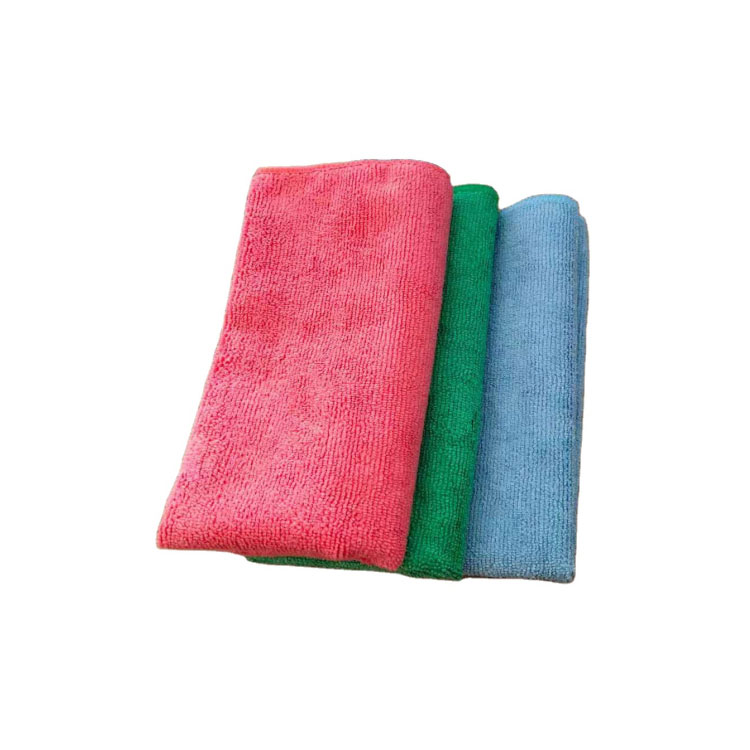
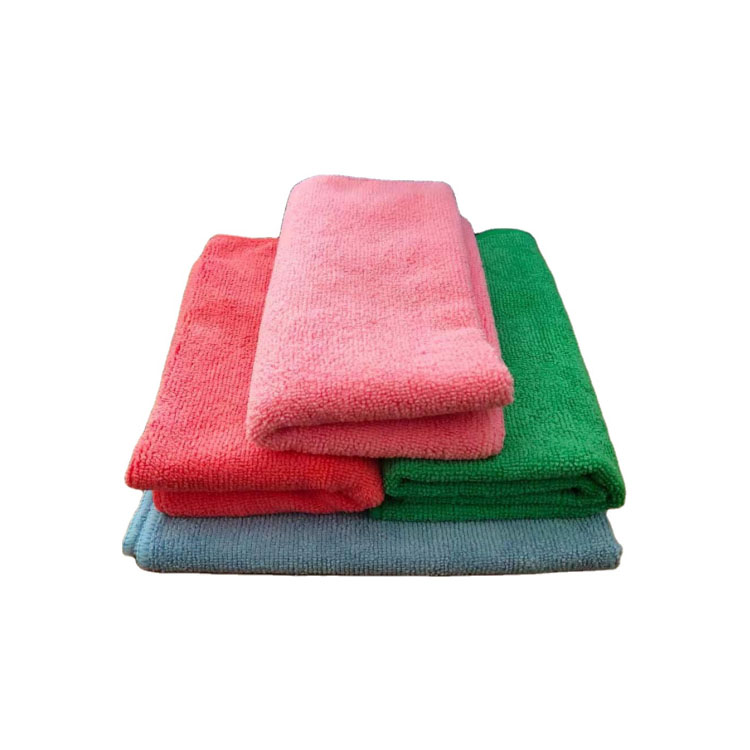
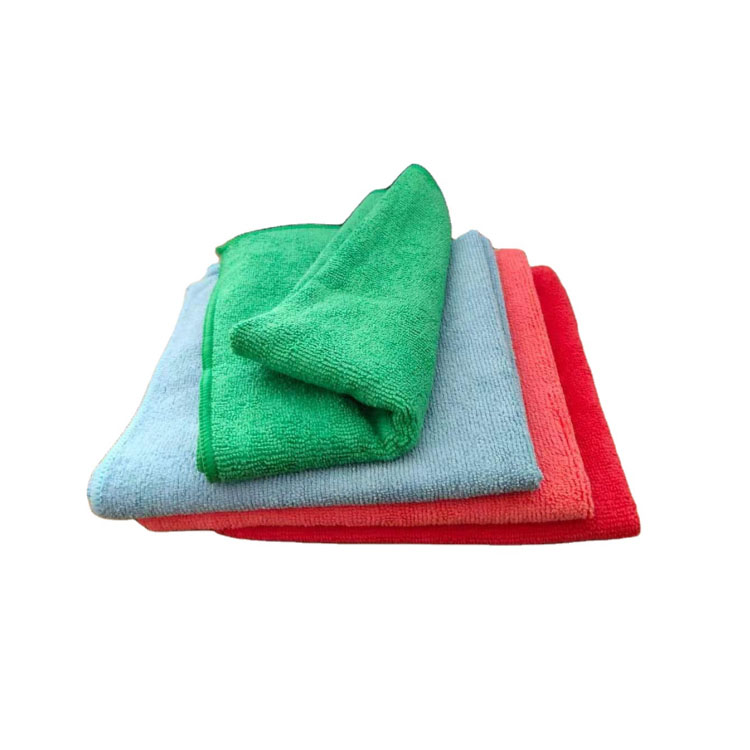
When a contractor or distributor is trying to roll out a commercial cleaning towel color coding program across multiple crews, prebuilt assortments reduce drift. A product like the 3-pack microfiber cleaning kit is not interesting because it has three towels. It is interesting because kits force standard counts, standard colors, and standard replenishment. And the broader cleaning kits category is where you build bundles that match real routes, not abstract SKU spreadsheets. (Wholesale Microfiber Towels Bulk)
Need mop integration too?
Then stop treating towels and floors as separate systems. If your crews use flat mops, link the towel protocol to microfiber mop cloths. Same zone logic. Same visual language. Same training script. Different textile, same control model. That is how a housekeeping microfiber towel organization plan becomes an actual site-wide cleaning system rather than a nice-looking shelf. (Wholesale Microfiber Towels Bulk)
Write the SOP like you expect turnover
Because you should.
Commercial cleaning teams change. Supervisors rotate. New hires miss things. So the SOP has to be visual, boring, and impossible to misread. Post the cleaning towel color code chart in every janitor closet, every laundry handoff point, and every training binder. Put the rule in words and pictures. Example: “Red = toilet zone only.” Not “Red = washroom ancillary high-bioburden contact surfaces.” Nobody talks like that at 5:40 a.m.
And make the retirement rule visible. If the color fades enough to blur the zone assignment, pull it. If edges fray and fibers shed, pull it. If a towel gets used in the wrong zone, remove it from circulation and retrain. A system with no consequence is not a system. It is theater.
Use customization only if it reduces mistakes
I am pro-customization. I am anti-cosmetic nonsense.
If you are building this for a distributor, jan/san brand, or private-label line, use custom microfiber towel customization for the things that help operations: fixed colorways, printed zone labels, bundle logic, private-label carton marks, and repeatable specs. Use the factory quality-control workflow to lock inspection points, not to decorate a sales deck. The site’s own positioning leans into repeatable specs, multi-step QC, and export-ready documentation, which is exactly what a commercial cleaning buyer should care about. (Wholesale Microfiber Towels Bulk)
That is the hard truth.
A “best microfiber towels for commercial cleaning” conversation is usually not about the towel. It is about whether you are disciplined enough to build a system where procurement, training, storage, field use, collection, laundering, and replacement all speak the same language.
FAQs
What is a color-coded microfiber towel system?
A color-coded microfiber towel system is a standardized cleaning method that assigns one towel color, one fabric spec, and one laundering rule to each zone or task, so crews can identify the right cloth instantly, avoid cross-use, and keep commercial cleaning workflows consistent across sites and shifts.
That is why I treat color as the label, not the strategy. The strategy is the operating rule behind the label.
How many colors should a commercial cleaning program use?
The right number of colors in a commercial cleaning program is the minimum number that separates risk categories without confusing crews, which usually means four colors for general surfaces, restrooms, food-adjacent zones, and glass, with a fifth color added for isolation, biohazard, or healthcare-adjacent work.
If the building is simple, keep it tight. If the risk profile is messy, add a lane before you add excuses.
What GSM is best for commercial cleaning microfiber towels?
The best microfiber towel weight for commercial cleaning is the GSM range that matches the soil load and surface sensitivity, with lighter 220-250 GSM cloths working well for glass and mirrors, and denser 280-320 GSM cloths working better for restroom work, wet wipe-down tasks, and repeated high-contact cleaning.
Buyers who skip this step usually end up using one mediocre cloth for everything. That saves pennies and burns hours.
How do you prevent cross-contamination with microfiber cloths?
Cross-contamination is prevented in a microfiber cloth program by locking each towel color to a defined zone, storing clean and dirty textiles separately, training crews to work from lower-risk to higher-risk surfaces, and auditing misuse visibly enough that supervisors can catch errors before those errors become normal behavior.
Can antimicrobial microfiber towels make infection-control claims?
Antimicrobial microfiber towels are treated textile products whose marketing claims must stay within the legal scope of the treatment, which means buyers need to separate product-preservation language from public-health promises and verify whether the claim is about protecting the towel itself or protecting people and surfaces.
That distinction is not wordplay. It is compliance. EPA’s 2024 manual is the line in the sand. Read the agency guidance. (US EPA)
What is the fastest way to build a color-coded microfiber towel system for a new account?
The fastest way to build a color-coded microfiber towel system for a new account is to define zones first, assign fixed colors second, choose task-specific cloth specs third, and then deploy pre-counted kits with posted visual rules so new cleaners do not have to interpret the program on the fly.
If speed matters, start with a small SKU set and ruthless rules. Complexity can come later. Confusion cannot.
If you want this system to survive contact with real crews, build it around discipline, not pretty colors. Start with cleaning microfiber towels, separate your glass lane with microfiber glass cloths, bundle replenishment through cleaning kits, and lock the repeat-order spec through customization. That is how the system becomes real.
Microfiber towel manufacturer & factory for custom, OEM, and private label programs. Focused on repeatable B2B supply for USA & EU markets (plus selected Asian countries).