Microfiber Hair Drying Towels vs Cotton Towels for Salons
Most salons buy towels by habit, not by workload. Here’s the blunt comparison between microfiber and cotton for absorbency, laundry turnover, compliance risk, and profit.
Choosing salon towels is not about habit. It is about workflow. For high-volume salons, the right towel should reduce dripping, shorten blow-dry preparation time, and return to service quickly after washing. That is why the comparison between microfiber and cotton should start with operating needs, not tradition.
In this guide, we compare the two options by absorbency, wet weight, drying turnaround, maintenance, and resale potential. If your salon handles long hair, frequent wash cycles, or branded retail add-ons, the right towel specification can improve both efficiency and customer experience.
Here is the hard truth. For most busy salons, microfiber wins the operating model even when cotton wins the nostalgia test, because a good 80/20 polyester-polyamide wrap in the 280-420 GSM zone usually pulls more free water off the hair before the dryer ever turns on, stays lighter in the hamper, and comes back into rotation faster after washing. Cotton, which is cellulose and not plastic, still feels more familiar and more forgiving under old-school routines, but familiarity is not the same thing as efficiency. And efficiency is what keeps a six-chair or ten-chair salon from bleeding labor.
I’ll go further. Owners who treat towels as a commodity line item are usually misreading the business, because the towel is not just fabric; it is a time-management tool, an energy input, a stylist comfort issue, and, when sold retail, a margin product with branding attached.
Look at the market signals. In the December 2024 USDA Cotton and Wool Outlook, U.S. cotton production for 2024/25 was forecast at 14.3 million bales, up 18% from 2023/24, while the projected U.S. farm price fell to 66 cents per pound and export prospects were described as the lowest in nine years. That does not mean cotton is disappearing. It means cotton is still a volatile input with margin pressure, global competition, and quality variability that buyers ignore at their own expense.
And cotton supply is not some peaceful old reliable, either. Reuters reported in August 2024 that flooding and political turmoil in Bangladesh, one of the world’s biggest garment hubs, cut production by 50% at some factories, with industry voices warning recovery could take at least six months and that 10% to 15% of business might shift elsewhere. If you are sourcing towel inventory on long lead times and telling yourself cotton is the “safe” fabric, that story should bother you.
But microfiber is not innocent. The 2024 Interagency Report on Microfiber Pollution pushed the issue directly into federal policy, and the text of the Fighting Fibers Act of 2024 is even more specific: beginning January 1, 2030, the proposal would block the sale of new U.S. residential and commercial washing machines unless they include a microfiber filtration system, with a mesh size of not greater than 100 micrometers or an equally effective standard. So yes, microfiber often beats cotton on salon-floor performance. And yes, it creates a filtration and waste-handling problem smart operators should start pricing in now.
Then there is the utility bill. Lodging is not salon, I know, but it is a useful proxy for towel-heavy operations, and the U.S. Energy Information Administration reported in 2023 that water heating accounted for about 20% of end-use energy consumption in lodging buildings, with water-heating intensity at 16.5 MBtu per square foot. My inference is not exotic: when your business washes, dries, and turns fabric all day, lighter towels and faster dry-back matter more than most owners admit in public.
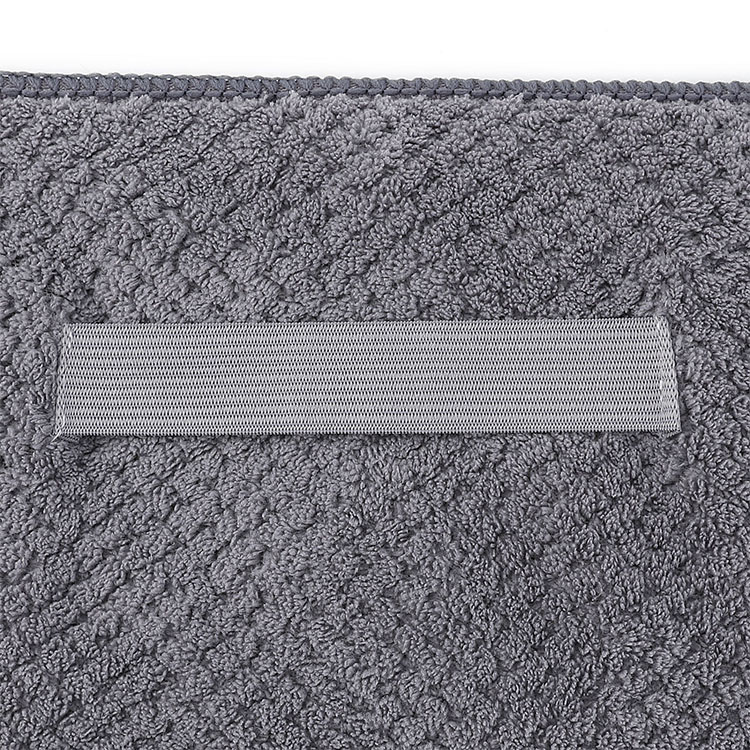
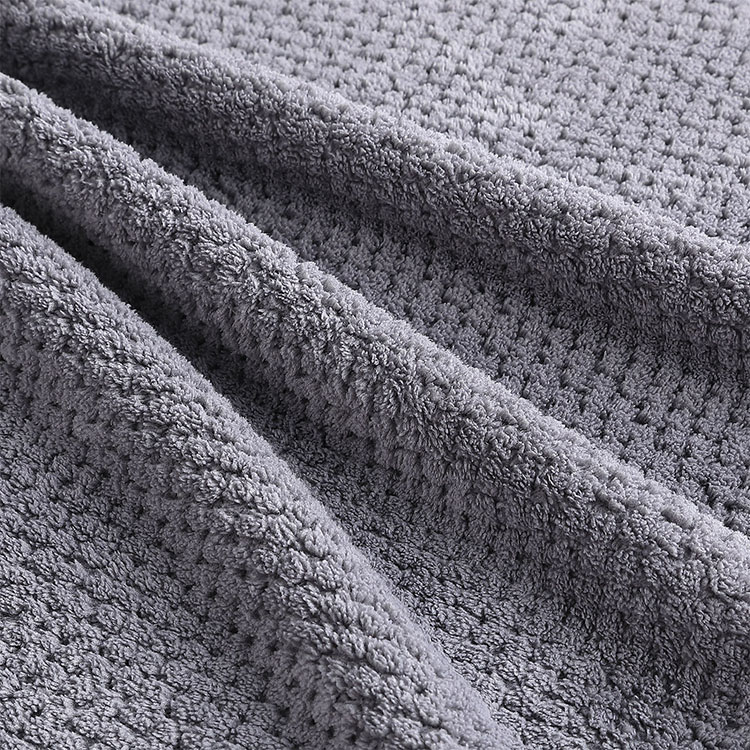
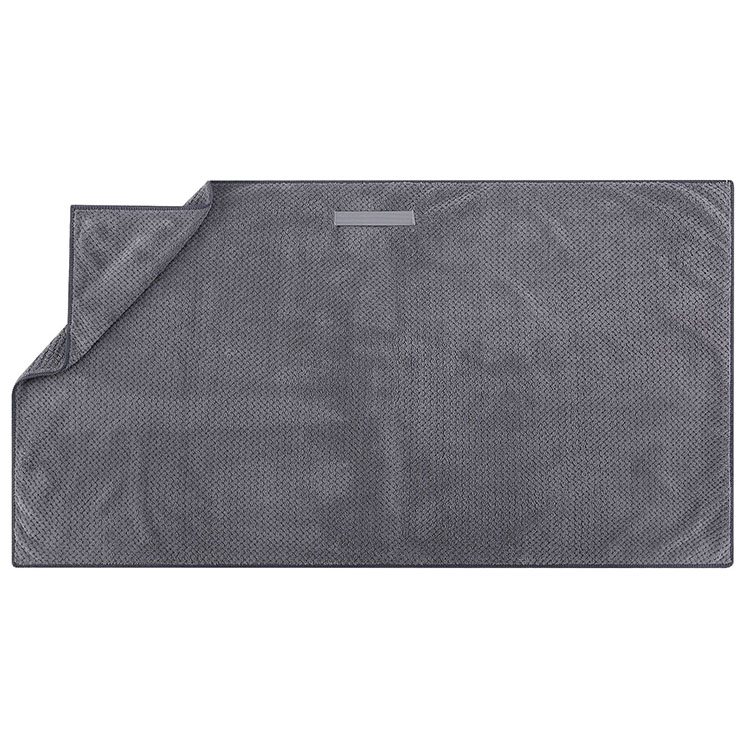
What would I actually buy? For shampoo stations and color-processing downtime, I would lean toward wrap formats like Button Loop Hair Towels for Salon OEM because hands-free control matters. For long, dense, extension-heavy, or highly porous hair, I would push buyers toward Extra Absorbent Hair Towels for Long Hair because that is where saturation speed exposes weak towels fast. If a team wants a fuller, more traditional hand-feel, the bridge product is often Terry Microfiber Towels. And if retail resale is part of the play, the site is already telegraphing that path through Custom Microfiber Towels OEM, with private label support, labels, hangtags, inserts, sleeves, and box-ready packaging.
That is the insider answer. Do not ask one towel to do every job. Build a working towel system: microfiber for moisture removal and speed, cotton for narrower backup roles where your team is attached to the feel or where your laundry chemistry still favors it. Why make the dryer do the towel’s job?
Decision factor
Microfiber hair drying towels
Cotton towels
My take for salons
Initial water pickup
Faster surface-water removal
Slower on first pass
Microfiber wins for post-shampoo speed
Weight when saturated
Lighter
Heavier
Microfiber is easier on stylists and hampers
Dry-back between loads
Faster
Slower
Microfiber helps rotation in busy shops
Traditional feel
Less familiar to some clients/staff
Familiar, classic
Cotton wins on habit, not always on output
Blow-dry workload
Often reduced after wrap stage
Often higher
Microfiber usually saves time upstream
Bleach-heavy legacy laundry habits
Less forgiving
More familiar
Cotton still fits some old systems
Environmental scrutiny
Higher due to microfiber shedding
Lower on plastic-shedding issue
Cotton wins the optics, microfiber needs filtration planning
Retail private-label potential
Strong when spec’d well
Moderate
Microfiber has more modern performance storytelling
The biggest mistake I see is fake compromise. Buyers order cotton because they are nervous, then order cheap microfiber because they are curious, and end up testing neither fabric properly, with no wash protocol, no shrink tracking, no dry-back benchmark, no chair-count math, no reorder logic. That is not sourcing. That is improvisation with invoices attached.
If I were writing the final recommendation for a skeptical salon owner, it would read like this: make microfiber your primary working towel, keep cotton as a secondary or legacy category, and spec the microfiber properly from day one. That means closure type, GSM, edge finish, colorfastness, private-label need, pack count, and wash-cycle expectations are all decided before the first bulk carton lands.
FAQs
Are microfiber hair towels better than cotton towels for salons?
Microfiber hair towels are generally better for high-volume salons because they remove surface moisture faster, stay lighter when saturated, and return to service sooner than cotton, while cotton remains the better fit for operators who prioritize traditional hand-feel, established bleach routines, or a non-synthetic fabric preference. The trade-off is operational speed versus familiarity, and most busy backbars make more money on speed. (Wholesale Microfiber Towels Bulk)
How should salons choose hair drying towels?
The best salon hair drying towels are chosen by matching construction to service flow: wrap towels for processing time, extra-absorbent towels for long or dense hair, quick-dry towels for faster laundry turnover, and custom-branded options only when the towel is expected to function as both a working tool and a retail product. I would spec by workflow first, then by fabric story. (Wholesale Microfiber Towels Bulk)
Are microfiber hair towels better than cotton towels for long hair?
Microfiber hair towels are usually better for long hair because they absorb free water more aggressively, reduce dripping sooner, and help control the heavy wet load that exposes weak towel performance, whereas cotton often feels thicker but can become bulkier, heavier, and slower to cycle back into use. That is exactly why long-hair services are where towel choice stops being cosmetic and becomes operational. (Wholesale Microfiber Towels Bulk)
What GSM works best for salon hair drying towels?
For most salon hair drying towels, a mid-weight range around 280 to 420 GSM is usually the smart zone because it balances water pickup, manageable wet weight, drying turnaround, and reorder cost without turning the towel into a soggy, overbuilt brick after two busy rounds of service. Heavier is not always better; heavier is often just heavier.
Do salons still need cotton towels?
Cotton towels still make sense as a secondary salon towel category when you need a familiar client-facing feel, a backup stock for teams that are slow to change habits, or a simpler non-synthetic option while your business works through microfiber filtration and disposal policies. But secondary is the key word there. I would not make cotton the default moisture-removal towel in a fast-turn salon unless the team has tested both and still prefers the drag. (US EPA)
My recommendation is blunt: stop buying towels by memory. Start with the Hair Drying Microfiber Towels cluster, sample the wrap and high-absorbency formats, test them against your cotton baseline for dry-back time and stylist handling, and only then lock the private-label or bulk program through Custom Microfiber Towels OEM. That is how you buy hair drying towels like an operator instead of like a spectator. (Wholesale Microfiber Towels Bulk)
Microfiber towel manufacturer & factory for custom, OEM, and private label programs. Focused on repeatable B2B supply for USA & EU markets (plus selected Asian countries).