Why Auto Detailing Shops Need Different Towel Colors
Most detailing shops do not have a towel shortage. They have a process problem. This piece explains why different towel colors protect finish quality, speed up training, and keep expensive mistakes from bouncing between bays.
I have walked through enough detailing shops to know the real mess is rarely on the floor; it is in the towel pile, where one innocent-looking microfiber that touched brake dust at 9:10 a.m. somehow comes back at 11:40 a.m. for a black-hood final wipe, and then everybody acts shocked when the finish looks nervous under LED lights. And who gets blamed?
Not the towel. Never the towel.
Most shops do not have a supply problem. They have a memory problem, a discipline problem, and, yes, a management problem. I will say that out loud because most owners will not. If your system depends on a tech remembering which blue towel touched silicone dressing, iron fallout, compound dust, leather cleaner, or greasy jambs, then you do not have a system. You have a gamble.
The logic is bigger than detailing. CDC guidance published on March 19, 2024 says teams should use different color cloths for different areas to avoid cross-contamination, and the 2024 Australian CLEEN trial showed what happens when cleaning stops being improvisation and becomes a controlled process: healthcare-associated infections fell by 34.5%, with New South Wales summarizing the project as a five-fold jump in cleaning performance. That is a hospital setting, not a wash bay, but the operational lesson is the same—separate tools, separate uses, fewer mistakes.
And detailing has its own version of the same pressure. Reuters reported in May 2024 that the average age of U.S. cars and light trucks hit a record 12.6 years, while S&P Global Mobility said vehicles aged six to fourteen are expected to make up 70% of the fleet over the next five years. Older paint, tired clearcoat, oxidized trim, sticky interior plastics, soft piano-black surfaces—those cars punish sloppy towel handling much faster than a new lease return does.
So here is my hard truth: different towel colors are not about looking organized on Instagram. They are about making contamination visible before it becomes billable rework.
They say, “We only use microfiber.” As if that ends the conversation. It does not. A 40×40 cm, 320 GSM, edgeless 70/30 towel for polish removal is not the same tool as a 60×90 cm, 900–1200 GSM twisted-loop drying towel. A glass cloth built to expose haze is not the same as an interior towel that has spent the day around APC dilution, leather cleaner, body oils, sunscreen residue, and UV dressing. And a wheel towel that has kissed ferrous brake dust should never get promoted back to paint just because it “still feels soft.”
Three colors minimum.
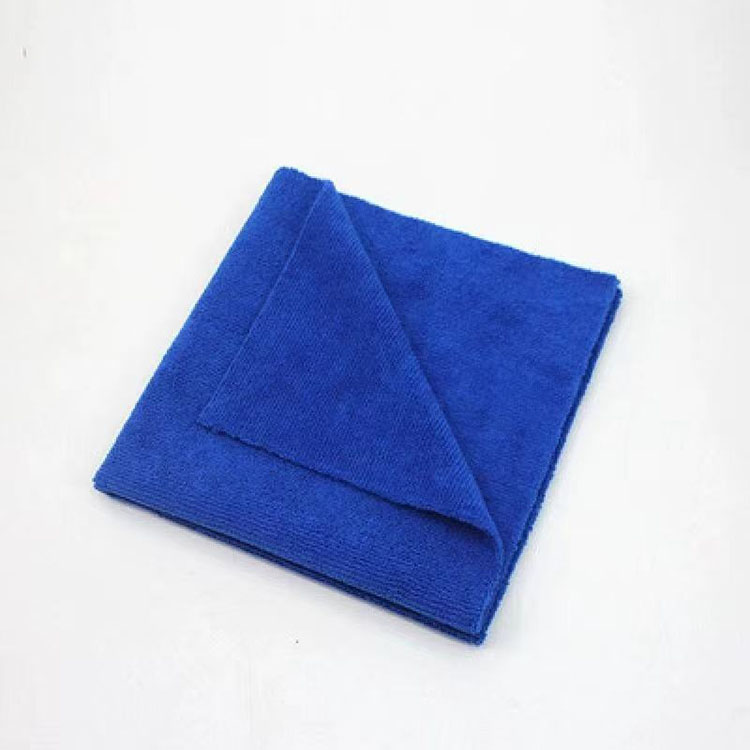
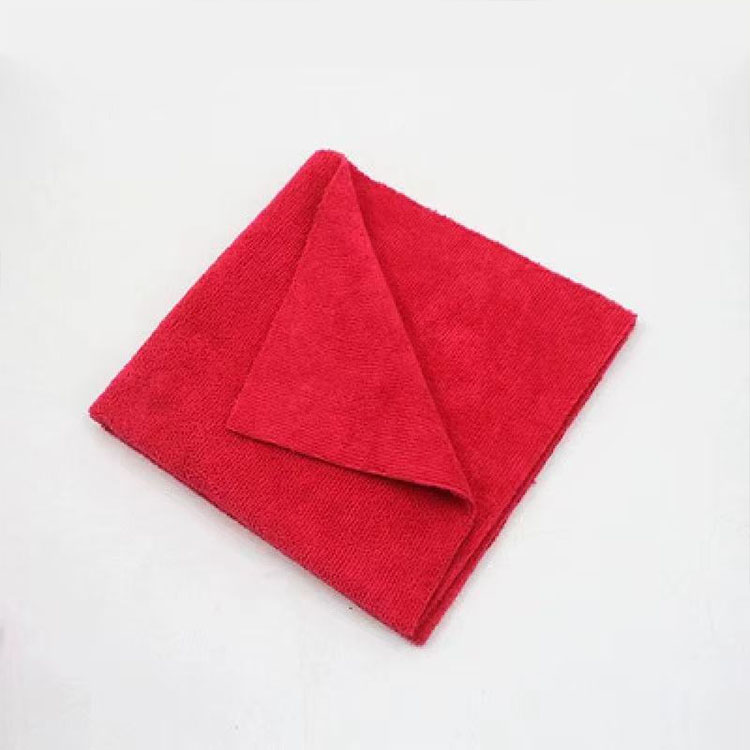
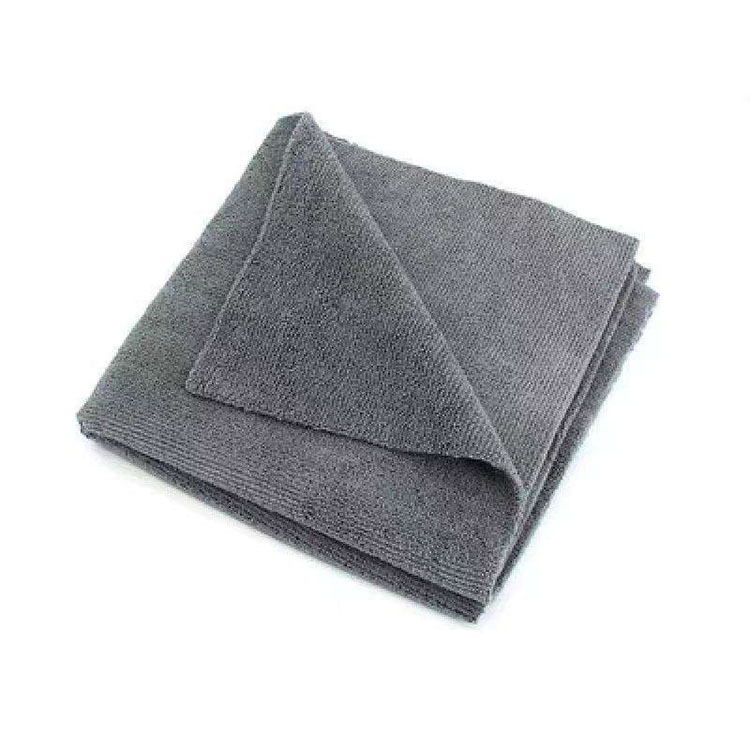
If I am building a real shop system, not a weekend-hobby fantasy, I want one bright color for paint correction and final wipe-downs, one separate color for drying, one for glass, one for interiors, and one dark, no-nonsense color for wheels, exhaust tips, door jambs, and grime-heavy work. The palette itself is arbitrary. The separation is not. Pick yellow, blue, green, gray, black. Pick orange, teal, purple, charcoal, brown. I do not care. I care that the assignment never drifts.
Because drift is expensive.
A towel loaded with spent compound can haze a windshield. A glass towel with silicone dressing in the fibers can make a perfect interior detail look amateur. A wheel towel carrying iron particles can turn a soft black hood into a scratch report. And a drying towel that touches rocker-panel grit can quietly become the shop’s most expensive rag by lunchtime.
My version of a sane towel map looks like this:
Task
My Color Choice
Towel Spec I’d Use
What It Prevents
Retirement Rule
Final wipe / polish removal
Yellow
350–500 GSM, edgeless, 40×40 cm, 70/30 or 80/20
Compound dust and spent residue crossing into finishing work
Demote at first grabby feel or edge wear
Drying
Blue
900–1200 GSM twisted loop, 50×80 cm or 60×90 cm
Paint-safe towels being overloaded with rinse water and grit
Retire when absorbency drops or drag increases
Glass / screens
Green
300–400 GSM tight weave or waffle, 40×40 cm
Silicone smear, dressing transfer, streaking
Retire after repeated smearing or linting
Interiors
Gray
280–360 GSM short pile, 40×40 cm
Cross-contact between plastics, leather, dust, and glass
Demote after dye transfer, odor, or staining
Wheels / jambs / exhaust
Black
300–400 GSM utility microfiber
Brake dust, iron particles, grease, road film moving upstream
Never returns to paint or glass, ever
But towels are only half the story. The other half is what happens after use. I have seen shops spend serious money on coatings, compounds, blowers, Rupes machines, and lighting, then throw all the margin away by laundering paint towels with wheel towels because “the detergent will handle it.” No, it will not. Separate bins. Separate wash loads. Separate storage. Separate retirement logic. That is what a real auto detailing towel color system looks like.
And yes, I am still talking about profit.
The reason color coding works is brutally simple: it reduces decision time. A new tech does not need to remember twelve rules when the towel itself carries the rule. That matters on a busy Saturday when two correction jobs, one wash-and-wax, one interior rescue, and one ceramic maintenance wash are colliding in the same bay. Shops lose money when senior techs become human reminder apps for basic textile handling.
There is also a buying angle that too many operators ignore. If you are standardizing a system across multiple bays, or across one shop that wants to act like two, you need spec-locking. That is why the move from generic towels to a defined car care microfiber towel assortment matters, and it is why I like seeing a site connect that assortment to pages for twisted loop drying towels, edgeless detailing towels, and a custom microfiber towel program where GSM, edge finish, packaging, and repeat-order logic can actually be locked down. That is not brochure fluff. That is how you stop every reorder from becoming a new experiment.
One more thing. I hate the fake-efficiency habit of treating microfiber like a near-disposable shop rag. NOAA reported in November 2024 that microfibers were the predominant debris found in sand samples from all 37 national park beaches studied, making up 97% of debris counted. So no, “just toss it” is not a grown-up policy. Buy better. Separate better. Wash better. Retire better.
This is the part owners resist.
They want one “best towel” that does everything because one SKU feels efficient. It is not efficient. It is sloppy. The best towel colors for car detailing are the ones that turn your SOP into muscle memory, and the best microfiber towels for auto detailing are the ones that stay trapped inside a narrow job description. Precision beats versatility in a professional bay. Every time.
If I were tightening this site’s internal SEO around the topic, I would keep the article centered on auto detailing towels, then push readers naturally into the workflow pages that answer the next buying question: what the shop needs for bulk replenishment, what it needs for drying, what it needs for paint, what it needs for glass, and what it needs when it is ready to standardize packaging and reorders. That path is cleaner than dumping traffic into a vague category page and hoping the reader figures it out.
FAQs
Why use different colored towels in detailing?
Different colored towels matter because they turn contamination control into a visible operating system, letting a shop separate paintwork, glass, interiors, wheels, and engine-bay grime in seconds instead of trusting memory, which is exactly how swirl marks, smeared windshields, and pointless rework start on busy days.
I like color coding because it is low-tech and hard to misunderstand. The towel itself becomes the warning label. That is better than hoping a tired technician remembers what happened three cars ago.
What is a color-coded towel system in auto detailing?
A color-coded towel system in auto detailing is a shop rule set that assigns one towel color to one task, one soil level, and one wash path so technicians can identify safe microfiber instantly and avoid dragging polish dust, brake grime, silicone dressing, or greasy residue onto the wrong surface.
That means color is not decoration. It is a control device. Once a towel is assigned to wheels, jambs, glass, paint, or interiors, that assignment stays fixed until the towel is retired or demoted.
How do you organize detailing towels by color?
The best way to organize detailing towels by color is to map each color to a fixed task, store those towels in labeled bins, wash them in separate loads, and retire them by condition and contamination history rather than by how expensive the towel looked when it came out of the carton.
My advice is simple: bin labels, shelf labels, wash-bag labels, and zero exceptions. If your team has to ask where a towel belongs, your system is still too loose.
What are the best towel colors for car detailing?
The best towel colors for car detailing are the colors your shop can keep consistent, but the winning pattern usually reserves a bright, clean color for paint correction and final wipe-downs, another for drying, another for glass, another for interiors, and the darkest color for wheels, jambs, and filthy work.
I lean toward light colors for paint because contamination shows faster. I lean toward dark colors for wheels because those towels are not coming back into polite society anyway.
Can one microfiber towel be used for paint, glass, and wheels?
One microfiber towel should not be used for paint, glass, and wheels because each area loads the fibers with different contaminants, and once iron particles, polish residue, silicone dressing, road film, or greasy brake dust enter the pile, the towel stops being neutral and starts becoming a defect-delivery tool.
Could you get away with it once? Maybe. Should a professional shop build a process around maybes? Absolutely not.
Microfiber towel manufacturer & factory for custom, OEM, and private label programs. Focused on repeatable B2B supply for USA & EU markets (plus selected Asian countries).