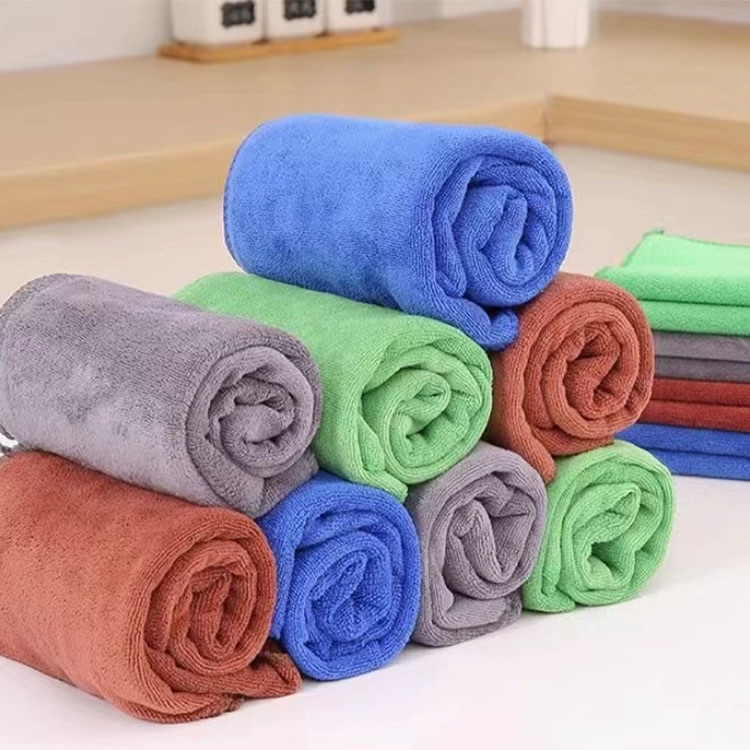
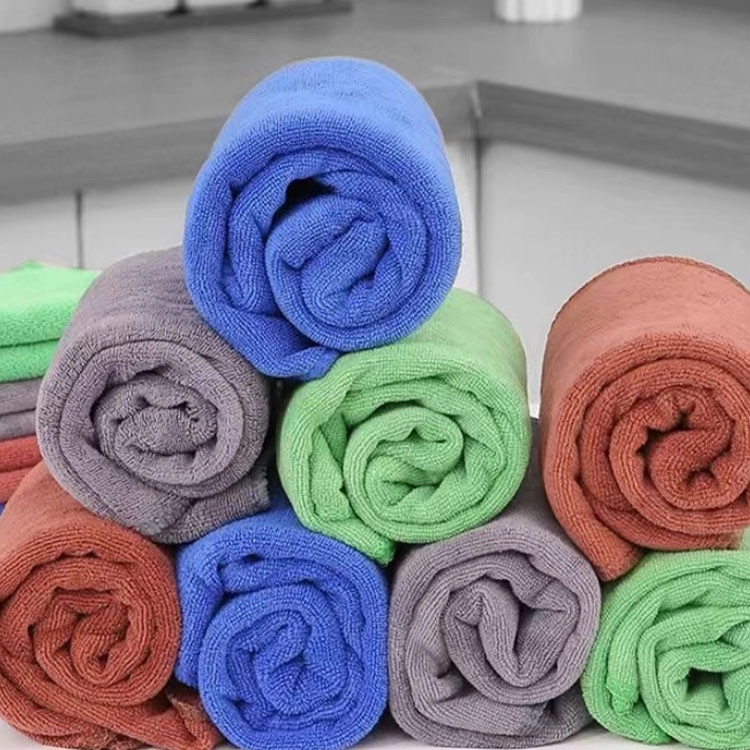
How to Choose the Right Microfiber Towel Supplier: A B2B Sourcing Checklist
A reliable microfiber towel supplier should be easy to verify.
Before placing a bulk order, buyers should confirm three things: production capability, QC workflow, and documentation readiness.
This checklist is designed for brand owners, distributors, and importers who need repeatable quality—not just a low first quote.
We focus on the practical evidence that helps reduce sample-to-bulk drift, packaging errors, and compliance delays.
Supplier, manufacturer, broker: the words are sloppy. Your risk isn’t.
Names lie.
A “microfiber towel supplier” can be a true microfiber towel manufacturer with knitting, dyeing, finishing, and inspection under one roof—or it can be a polished middle layer renting credibility from a factory you’ll never meet, which is exactly how spec drift sneaks in between your approved sample and your 20,000-piece reorder.
So, which one are you paying?
When I review supplier sites, I don’t look for buzzwords; I look for decision paths that match how B2B buyers actually source: application, function, material/weave, then packaging and audit workflow. The wholesalemicrofibertowelsbulk.com structure does that—products by application (car care, cleaning, glass), plus dedicated pages for audit-ready OEM/private label workflows and factory capabilities—which is what I want to see before an RFQ even gets a reply.
But. Structure isn’t proof. Proof is evidence.
Compliance is now a supply-chain tax. Pay it upfront or pay it at the border.
Border holds hurt.
On March 22, 2024, CBP said it stopped 540 shipments worth more than $306 million in February 2024 for forced-labor examination. That’s not a moral lecture; it’s a cashflow event with warehouse demurrage and missed PO windows baked in. According to CBP’s February 2024 monthly update, the enforcement tempo is visible in plain language, month by month.
Want the hard truth? If your “bulk microfiber towels supplier” cannot map yarn → fabric → dye house → cut/sew → pack-out with consistent entity names and addresses, you don’t have a vendor—you have a compliance blind spot.
The first email I send (and why it scares weak suppliers)
Three attachments. Minimum.
I ask for:
Commercial docs sample pack: pro forma invoice + packing list + carton marks + HS code they plan to declare (watch for sloppy classification games).
Traceability statement: factory name/address + where fabric is produced/finished + subcontractors (if any).
QC release rule: AQL target (e.g., 2.5 major / 4.0 minor) and who signs shipment release.
And then I ask a question that triggers honesty: “If CBP holds this shipment, who produces the underlying records—you, or your upstream mill?”
Microfiber towel GSM specifications: GSM is one number. Your customers feel the rest.
GSM isn’t enough.
If you only specify “300 GSM,” you’re outsourcing the real decisions—blend ratio, yarn type, weave, pile geometry, edge construction, finishing chemistry—to whoever wants to protect their margin more than your reviews, and that’s how “same towel” becomes “same SKU name, different performance.”
Still okay with that?
Here’s the spec stack I use for reorder stability:
Polymer and blend: PET polyester ((C_{10}H_{8}O_{4})n) / polyamide (often Nylon-6, ((C{6}H_{11}NO)_n)) with declared ratios (80/20 vs 85/15 vs 70/30).
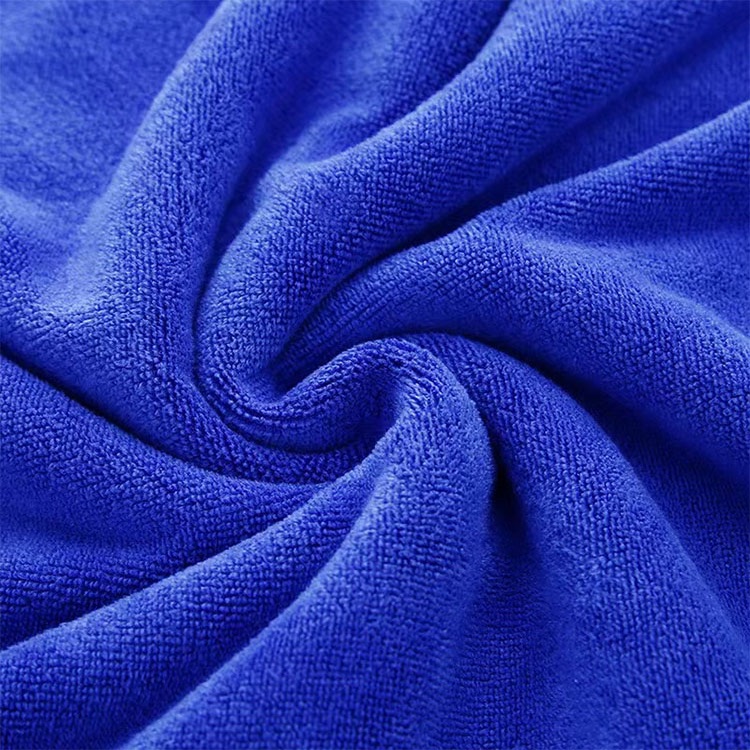
Weave family + pile: terry, waffle, suede, twisted loop; pile height target (mm) and tolerance.
Edge: overlock, binding, laser-cut edgeless; thread type if stitched.
Finish + lint strategy: especially for glass/screen cloths.
Tolerances: GSM ±5% (tighter for premium), size ±1 cm, weight-per-piece band, color ΔE tolerance if branding matters.
Then I choose product families by application, because a “one towel fits all” line is how returns happen:
For detailing programs, you’ll usually split SKUs: drying vs buffing vs coating-level wipe. Start with the category set for car care microfiber towels and pin specs per task.
For general janitorial and household, build a replenishment ladder through cleaning microfiber towels (different GSM tiers, same visual identity, fewer listing headaches).
For streak-sensitive surfaces, treat it like a separate engineering problem—use a dedicated spec and validate wash performance using microfiber glass cloths.
The supplier quality audit checklist buyers pretend they run (and the one that actually works)
Audit like you mean it.
A real supplier quality audit checklist isn’t “do you have ISO.” It’s: “show me the records that prove you can repeat an approved sample in bulk, and show me the trapdoors where drift enters—material substitution, finishing shortcuts, rushed pack-out, and ‘close enough’ inspection.”
So I score suppliers on controls, not charm.
The checklist table I use to compare suppliers side-by-side
Control Point
What you require (written)
What you demand (evidence)
What disqualifies them fast
Incoming yarn/fabric verification
Blend ratio and lot traceability
Incoming inspection logs + lot IDs tied to production batches
“We don’t track lots; it’s stable.”
GSM measurement method
Standard method + sampling plan
Recorded GSM results per lot (not “once per order”)
GSM declared but never measured
Shrinkage & colorfastness
Test method + pass/fail thresholds
Reports referencing ISO 105-C06 / AATCC equivalents (as applicable)
“Color is fine” with zero data
Lint/streak controls
Definition of “lint-free” for your channel
Wash-and-wipe protocol + before/after photos on glass/acrylic
“Microfiber never lints”
Edge failure rate
Edge type locked in spec
In-line defect log + rework rules
Edge construction changes midstream
Pack-out accuracy
Count, labeling, barcode, insert rules
Pack-out checklist + carton mark photos
“We pack by experience”
Release standard
AQL + defect categories
Signed final inspection report per shipment
No written release criteria
If your program is private label, don’t skip packaging control. It’s not “marketing.” It’s the difference between 0.6% and 3.2% returns when Amazon customers receive the wrong insert card.
Sustainability claims: the microfiber shedding problem doesn’t care about your branding deck
Microfibers shed.
On April 16, 2024, Columbia researchers wrote that an average three-pound laundry load can shed hundreds of thousands of microfibers into sewer systems, with fibers passing through treatment and into waterways—so “recycled” and “eco” claims need to survive scrutiny beyond the product page. See Columbia Lamont’s April 2024 report on laundry microfibre pollution.
Here’s my unpopular take: if you’re going to sell “RPET recycled towels,” you must also sell durability and wash-life consistency, because shorter lifespan equals more shedding and faster replacement cycles.
So when a supplier pitches recycled content, I ask for:
Performance delta vs virgin (absorbency, linting, shrinkage after 10/25 wash cycles)
Claim discipline (no “plastic-free” nonsense; this is still polymer)
If you need a starting point for a sustainability-led line that keeps specs repeatable, use a defined category like RPET recycled towels—then validate with your own wash protocols, not supplier photos.
FAQs
What is a microfiber towel supplier in B2B terms?
A microfiber towel supplier in B2B is the commercial entity that quotes, contracts, and ships microfiber towels at scale, but may or may not control manufacturing steps like knitting, dyeing, finishing, inspection, and pack-out—so buyers must confirm whether they’re buying factory-controlled output or brokered inventory with higher spec-drift risk.
After that definition, the operational tell is simple: can they produce lot-level QC records and consistent export documents with a stable factory address and legal entity name?
What’s the difference between a microfiber towel manufacturer and a wholesale microfiber towels supplier?
A microfiber towel manufacturer is the party that actually runs production processes (fabric formation, dyeing/finishing, cut/sew, inspection) and can therefore lock repeatable microfiber towel GSM specifications, while a wholesale microfiber towels supplier may be a trading layer that sources from multiple factories and sells availability, not process control.
If your program lives on reorders, process control beats “good pricing” almost every time.
How do I verify “lint-free” claims for microfiber glass cloths?
“Lint-free” verification is a documented performance requirement where you define acceptable fiber shedding and streaking on target surfaces (glass, acrylic, screens) after a stated wash method, then test supplier samples using a repeatable wipe protocol so “lint-free” becomes measurable, not a marketing adjective.
For procurement, the key is consistency across lots—test two production lots, not just one pre-production sample.
What documents should I require for private label microfiber towels?
Private label microfiber towels documentation is the full package that makes your SKU repeatable and defensible: a locked spec sheet with tolerances, packaging artwork approvals, QC release standards (AQL and defect categories), and export documentation mapping cartons to SKUs—plus compliance records needed for your destination market and claim language.
If a supplier can’t do this cleanly, your brand will absorb the confusion.
What’s a practical remote supplier quality audit checklist for bulk microfiber towels?
A remote supplier quality audit checklist is a structured evidence request—video walkthrough plus dated QC records—that proves the supplier can control incoming materials, in-line checks, final inspection, and pack-out accuracy, with traceability from raw material lots to finished cartons so you can spot where drift and substitution occur.
Ask for the logs first; tours are easy to stage.
Your Next Steps
Pick a supplier. Don’t gamble.
Here’s the fast, disciplined sequence I’d run this week if I were choosing a microfiber towel supplier for a real wholesale program:
Write a one-page spec that includes more than GSM: blend, weave, pile, edge, finishing, tolerances, and defect definitions.
Run a compliance sanity check using real 2024 enforcement reality—CBP’s monthly forced-labor numbers are public, and they’re not abstract.
If you’re going private label, treat packaging and documentation as product features, and only proceed with suppliers who have an explicit workflow like this custom OEM/private label microfiber towels process.
If you paste your current RFQ (even rough), I’ll rewrite it into a spec-first version that forces apples-to-apples quotes and makes “same towel” mean the same towel—on the second order, not just the first sample.
Microfiber towel manufacturer & factory for custom, OEM, and private label programs. Focused on repeatable B2B supply for USA & EU markets (plus selected Asian countries).