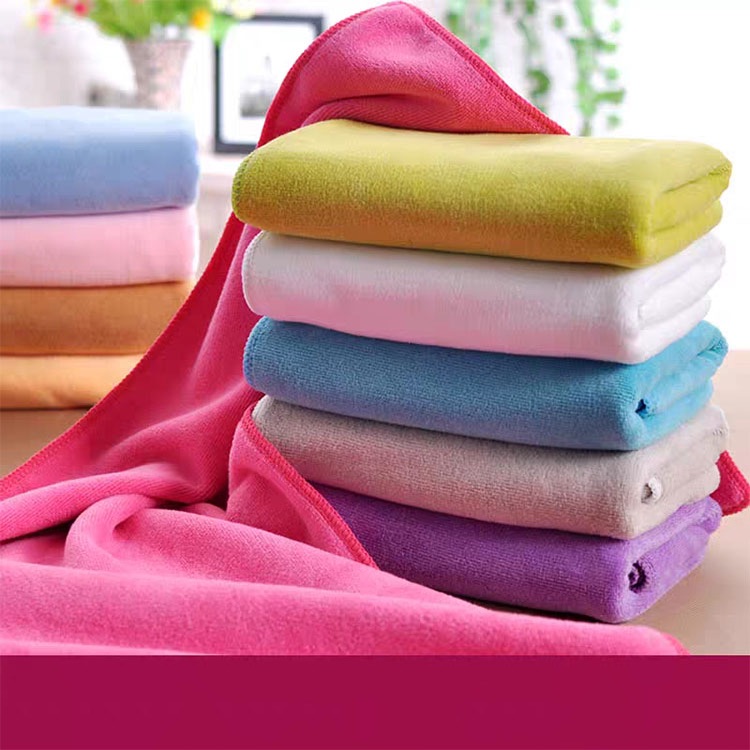
Should You Buy Microfiber Towels by Carton, Mixed SKU, or Kit?
Cartons cut unit cost. Mixed SKU buys market intelligence. Kits sell routines. The wrong format can leave you with slow-moving stock, higher handling cost, and a fake “savings” story.
If your business reorders the same towel spec every 30 to 45 days, the smartest buy is usually the boring one, because single-SKU cartons reduce pack complexity, simplify warehouse labeling, and keep replenishment clean in a way that clever assortments rarely do once the quote becomes a pick-pack-ship reality. So why do buyers keep overcomplicating it?
I’ll say the quiet part out loud: most people do not have a towel problem. They have a forecasting problem. They chase a lower per-piece number, ignore carrying cost, ignore repacking labor, ignore shelf confusion, and then act shocked when a “cheap” carton turns expensive three months later.
In March 2024, Reuters reported NRF expected U.S. retail sales growth of just 2.5% to 3.5% for the year, and by July Reuters noted retail sales momentum had slowed to 2.3% year over year in June 2024, down from 7.7% in January 2023, with households trading down and seeking cheaper options. That is the environment where overcommitting to the wrong carton hurts, and where a targeted mixed SKU or a sharp kit can outperform a brute-force bulk buy.
What each buying format is really for
Carton: the best choice when demand is already proven
Cartons win quietly.
A carton buy works best when one spec has already survived real use, real reorders, and real complaints, which means you know the application, you know the acceptable defect tolerance, and you know exactly which towel your customers or crews reach for first without needing a sales story wrapped around it.
That is why plain replenishment categories usually belong here. The site’s cleaning microfiber towels section is built around industrial cleaning, multipurpose cloths, and bulk packs, while its car care microfiber towels section is built around edgeless detailing towels, polishing towels, and twisted-loop drying towels—classic carton territory when you already know which spec drives repeat demand.
Here is my hard truth: if you are a jan/san distributor, car wash operator, hotel supplier, or detailing brand with one hero towel, carton buying is usually where margin gets protected. You reduce handling, reduce confusion, reduce returns caused by mismatched expectations, and make warehouse counting less stupid. That matters.
But I avoid carton buying when the buyer is still guessing. Guessing on GSM. Guessing on size. Guessing on color. Guessing on whether end users prefer edgeless, twisted loop, or something softer. That is not procurement. That is gambling in corrugated packaging.
Mixed SKU: the smartest option for distributors and first serious tests
Mixed SKU buys information.
A mixed-SKU order is not a compromise for indecisive people; done properly, it is a disciplined way to test demand across two or three specs without committing to full-carton depth on every variant, especially when you are entering a new channel, building an assortment, or selling to buyers with visibly different use cases.
The homepage of the site openly mentions mixed-SKU packing support for distributors and wholesalers, along with carton-level labeling for warehouse efficiency, and the customization page makes the logic even stronger by offering MOQ flexibility, repeat-order standardization, and packaging-ready fulfillment for multiple applications.
I like mixed SKU for three situations. First, distributor onboarding. Second, private-label pilot launches. Third, channel learning when you suspect your market wants two winners, not one. The penalty is obvious: more pack rules, more labeling logic, more opportunity for errors. But I would rather pay a little more for decision quality than save pennies and get trapped with dead stock.
There is another reason I lean this way in uncertain markets: Reuters reported in August 2023 that the four highest-volume publicly traded U.S. ocean importers reduced inventories by 4% quarter over quarter, the biggest drawdown since 2015, as large retailers shifted back toward just-in-time discipline. That is not a towel story on its face, but it is exactly the buying mood you should notice. Smart operators are not romantic about inventory anymore.
Kit: the right move when you are selling a routine, not just a cloth
Kits sell outcomes.
A kit works when the customer understands the task faster than the spec sheet, because “wash, dry, polish” or “spray, wipe, finish” is easier to buy than a loose pile of unrelated towels, and that clarity can justify higher average order value, better gifting appeal, and cleaner merchandising.
This is where I disagree with old-school bulk buyers who dismiss kits as fluff. They are wrong half the time. A good kit is not fluff; it is a pre-sold workflow. For promotional channels, starter sets, e-commerce bundles, seasonal launches, and retail shelves, the kit often beats the carton because it gives the buyer a story, a use sequence, and a cleaner price anchor.
But I still do not recommend kits for everything. If the end user only wants refill volume, kits add packaging cost, assembly cost, and often slow replenishment. The moment the routine is already learned and the spec is already locked, the kit’s advantage shrinks fast.
Extra packaging and assembly cost, weaker value if customer only wants refills
Best when the routine is the product
Where I’d place the bet, by buyer type
If you are a wholesaler or distributor
Go mixed first, then carton.
You need evidence before depth, and the site is already set up for that logic with application-based categories, mixed-SKU support, MOQ flexibility, and compliance documentation through its microfiber towel test reports and compliance support page. I would test two or three winning specs, read the reorder data honestly, then graduate only the survivor into carton volume.
If you are a retailer or DTC brand
Go kit first, then mixed SKU.
Customers do not wake up wanting “a 350 GSM microfiber towel with a certain edge finish.” They want a result. Clean glass. Faster drying. Safer detailing. Easier housekeeping. A kit communicates that result faster, and once you know which component drives repurchase, then you can break the range into a smarter assortment.
If you are a service business buying for internal use
Go carton.
This is the easiest call in the article. If your crews already know the towel and your buyer only cares about consistency, replenishment, and cost per use, kits are usually decorative noise and mixed SKU is usually unnecessary complexity.
FAQs
What does buying microfiber towels by carton mean?
Buying microfiber towels by carton means purchasing one standardized SKU—same size, color, construction, and pack count—in a master case intended for warehouse-friendly replenishment, which usually produces the cleanest unit economics, simplest labeling, and fastest reorder flow, but it also concentrates your working capital into one exact spec. That is why cartons belong with proven towels, not speculative ones.
What is a mixed SKU microfiber towel order?
A mixed SKU microfiber towel order is a bulk purchase that combines multiple towel variants in one procurement cycle so a buyer can test more than one spec, color, or end-use without committing deep inventory to every option, making it especially useful for distributors, pilots, and early-stage private-label assortment building. You pay a bit more in packing complexity, but you buy better decision data.
When does a microfiber towel kit make the most sense?
A microfiber towel kit makes the most sense when the product is being sold as a routine or use-case bundle—such as cleaning, drying, polishing, travel, or gifting—because the buyer is responding to a pre-built outcome, not merely comparing cloth specs, which raises merchandising clarity and can support a better selling price. That is why kits shine in retail, promo, and launch scenarios.
Which option is safest for a first order?
The safest first order is usually a controlled mixed-SKU buy or a narrow kit test, because it limits dead-stock exposure, reveals which towel actually reorders, and gives you live feedback on pack-out, pricing, and customer preference before you commit cash to deeper carton inventory. I only jump straight to cartons when prior sales data is already solid.
Your Next Move
Ask harder questions.
Do not ask a supplier for “best price” and stop there. Ask for a quote matrix covering carton, mixed SKU, and kit formats side by side, with MOQ, carton count, pack-out logic, labeling method, assembly cost, compliance docs, and repeat-order controls spelled out in black and white. The site you shared already has the bones for that conversation through its custom microfiber towel manufacturing page, factory overview, and compliance support page.
My closing opinion is simple. If demand is known, buy by carton. If demand is partly known, buy mixed SKU. If you need the package to do the selling, buy the kit. Everything else is just expensive confusion.
Microfiber towel manufacturer & factory for custom, OEM, and private label programs. Focused on repeatable B2B supply for USA & EU markets (plus selected Asian countries).