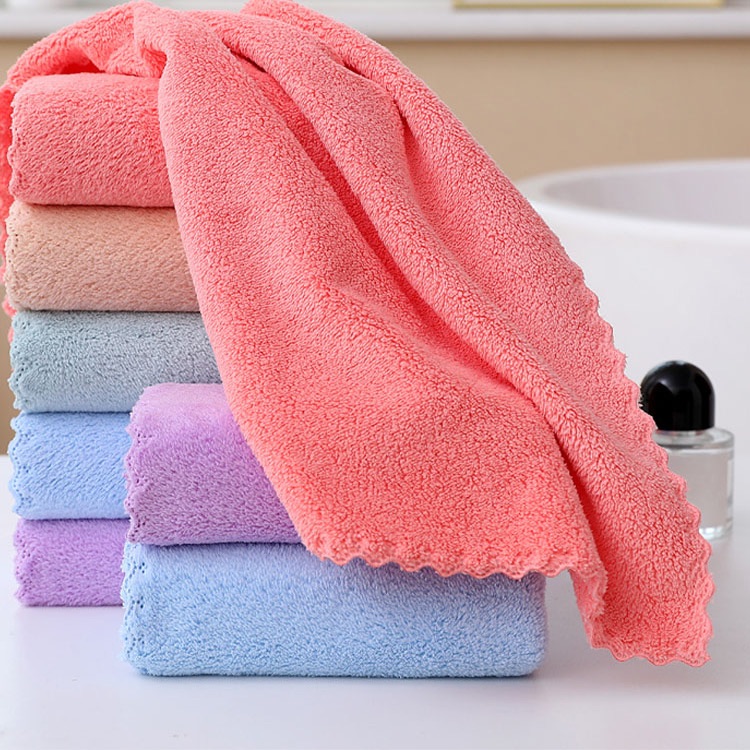
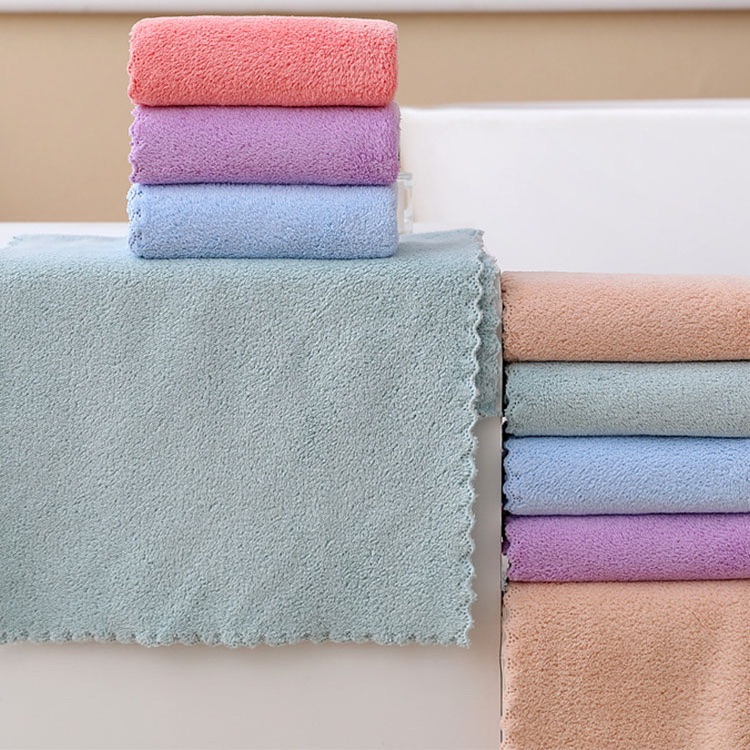
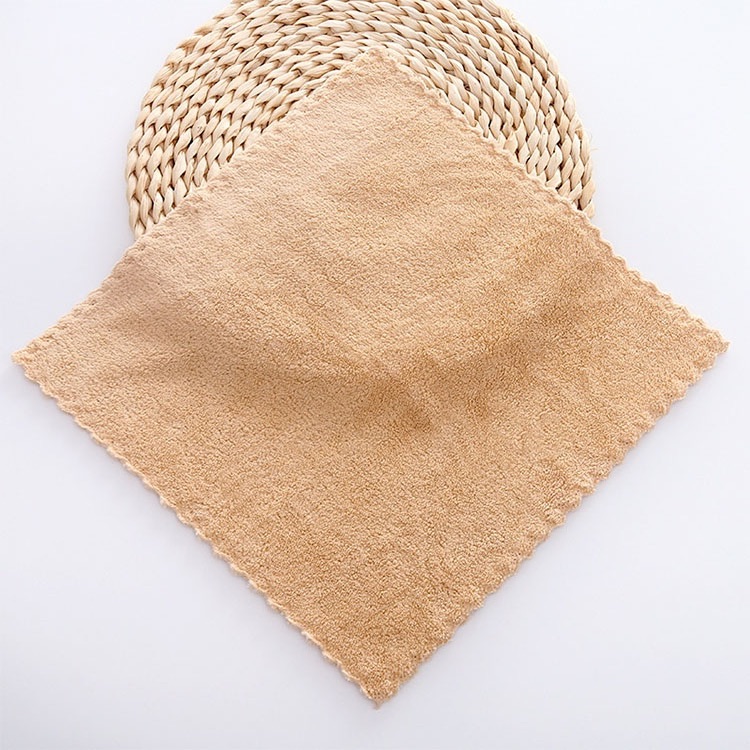
How to Read a Microfiber Towel Quote: Cost Breakdown from GSM to Packaging
Most buyers do not lose money on the quoted unit price. They lose it on the silent assumptions packed inside that quote: 80/20 vs 70/30, terry vs twisted loop, finished-size tolerance, carton math, barcode logic, and label files nobody reviewed until customs or Amazon did it for them.
Not because every supplier is crooked, although some absolutely are, but because a microfiber towel quote compresses ten different factory decisions into one friendly unit price, and the silent fields are where your margin gets mugged in daylight. Did you really think “350 GSM, blue, 40×40 cm” was a full spec?
I checked the site structure before writing this, and that part is actually smart: it is built around function, material/weave, application, and gift sets plus packaging, while the blog already leans into spec-first sourcing instead of generic sales copy. So the right internal-link spine here is not a lazy “contact us” dump; it is specs, customization, packaging, and application pages that help readers move from confusion to a cleaner RFQ.
Table of Contents
A quote is not a price tag, it is a compressed argument
I have watched buyers compare two OEM quotes for wholesale microfiber towels, see a $0.06 gap, and call that “price analysis,” when the reality was one supplier quoted 80/20 PET/PA, a tighter tolerance, printed insert cards, barcode sorting, and a real carton spec, while the cheaper one quoted hope, vibes, and a polybag. What else was going to happen?
A 350 GSM towel can be cheap junk, mid-tier workhorse, or premium paint-safe cloth depending on blend ratio, pile construction, split quality, edge finish, shrinkage control, and how aggressively the factory chased the target weight during finishing. I know that sounds harsh. It is also how this business works.
GSM matters, but weave and blend write the real invoice
Here is the part most quote sheets hide in plain sight: GSM tells you fabric mass per square meter, but it does not tell you whether the towel is terry, waffle, suede, twisted loop, double-sided, or edgeless, and it definitely does not tell you whether the polyester/polyamide ratio is 80/20 or 70/30. If you compare the site’s terry microfiber towel options with its car care microfiber towel category, the mismatch becomes obvious: bath or janitorial terry and detailing edgeless towels do not fail the same way, so they should never be quoted as if they were cousins.
I am blunt on this. For bulk microfiber towels, 80/20 PET/PA is usually the commercial workhorse. For softer hand-feel, more glide, and premium detailing or cosmetic use, 70/30 often earns its surcharge. But I do not worship 70/30, because a badly split 70/30 towel still loses to a well-made 80/20 towel every day of the week.
Quote line
What it really means
Margin risk if vague
What I would lock in writing
GSM
Fabric weight only
Same GSM can perform wildly differently
300, 350, or 420 GSM with tolerance
Fiber blend
PET/PA ratio
Softness, absorbency, and cost drift
80/20 or 70/30 by weight
Weave
Terry, waffle, suede, twisted loop, edgeless
Wrong end use, wrong buyer expectations
Exact construction and pile style
Finished size
Post-wash, post-cut dimensions
Carton math and retail complaints
40×40 cm or 16×16 in with tolerance
Edge finish
Overlock, hidden edge, ultrasonic, edgeless
Scratching, fray rate, returns
Exact edge method by SKU
Packaging
Unit pack, inner pack, outer carton
Freight inflation and relabel cost
Polybag, belly band, box, pouch, barcode, carton marks
Documentation
Fiber declaration, tests, origin support
Customs delay and marketplace trouble
List of required docs before deposit
My rule
If the quote only says “microfiber towel, 350 GSM, 40×40 cm,” it is not a quote. It is bait.
Packaging is where fake cheap quotes get exposed
Margins disappear fast.
In 2024, Reuters reported that container freight prices from Asia to the U.S. and Europe had tripled since early 2024, and Reuters also reported in January 2024 that the Shanghai Containerized Freight Index had jumped 114% since mid-December as Red Sea disruption pushed ships onto longer routes. That means carton density, pack count, and cube efficiency are not warehouse trivia anymore; they are price architecture. Read Reuters on Singapore port congestion and freight spikes and Reuters on the January 2024 container-rate jump if you think packaging details are small stuff.
So when I read a microfiber towel quote, I want the pack-out logic in black and white: 1 pc or 3 pc set, OPP bag or zipper pouch, hangtag or belly band, 12 pcs or 24 pcs per inner, 96 or 144 pcs per master carton, carton dimensions, gross weight, net weight, EAN-13 or FNSKU handling, and whether inserts ship preloaded or loose. Why? Because “standard export packing” is factory slang for “we will decide later.”
This is exactly where the site’s custom packaging sets for private label programs fit naturally, because those pages are already broken into hangtag, box, and pouch options, and the factory capability overview plus the customization page explicitly talk about packaging-ready fulfillment, export packing, repeatable specs, and multi-step QC for bulk orders. That is the right internal path for a reader who starts with microfiber towel pricing and ends up realizing the carton is half the argument.
What smart buyers ask before approving packaging
I keep it simple. Does the package sell, survive, scan, and ship?
If the answer is fuzzy on even one of those four, the cheap quote is usually fake.
Compliance is not paperwork, it is unit economics with teeth
Read deeper.
The FTC’s apparel-labeling guidance states that most textile and wool products sold in the U.S. must disclose fiber content, country of origin, and the identity of the responsible business, and the same page notes that manufacturers and importers must provide care instructions under the Care Labeling Rule. Over in Europe, the European Commission’s review of Regulation (EU) No 1007/2011 says current textile rules are limited to fibre composition and that the revision effort is aimed at more uniform rules, less fragmentation, and better information for buyers. That means your label file is part of the quote whether sales wants to admit it or not.
And no, I do not buy the old excuse that traceability is somebody else’s department. Reuters reported in May 2024 that 19% of 822 tested cotton-containing products showed traces of Xinjiang cotton, and another Reuters report that month said the U.S. added 26 Chinese cotton traders or warehouse facilities to the UFLPA Entity List, bringing the total to 65 at that point. Microfiber towels are usually synthetic, yes, but the lesson is bigger than cotton: customs and regulators now treat textile documentation as live ammunition, not decorative admin. See Reuters on the 19% Xinjiang finding and Reuters on the UFLPA additions.
Then there is the environmental angle, which too many sourcing teams still treat like optional branding glitter. EPA’s Trash Free Waters page says NOAA and EPA co-led a Report to Congress on microfiber pollution, and EPA’s webinar page on the report says the July 2024 federal report was released because microfiber pollution is an emerging issue of environmental concern with ongoing U.S. efforts to address it. So if you sell RPET claims, anti-shed claims, or “built to last” claims, your quote had better reflect durable construction and honest care instructions.
My unpopular opinion
A supplier who is sloppy on labels is usually sloppy on specs.
I have rarely seen the opposite.
The quote-reading sequence I actually use
First, I read the fabric truth: GSM, PET/PA ratio, weave, split quality, edge finish, shrinkage tolerance, and colorfastness target.
Then I read the conversion truth: finished size, logo method, sewing method, AQL expectation, sample approval code, and whether the quoted towel matches the approved sample or merely resembles it in a flattering mood.
Then I read the shipment truth: unit pack, carton pack, carton dimensions, barcode logic, destination-market label language, Incoterm, and whether freight is assumed, excluded, or conveniently blurred.
That is the whole game. Not mysterious. Just ignored.
FAQs
What is GSM in a microfiber towel quote?
GSM, or grams per square meter, is the fabric-weight measurement that tells you how heavy the towel fabric is across one square meter, but it does not fully define softness, absorbency, glide, or durability because blend ratio, weave, splitting quality, finishing, and edge construction still control real-world performance.
So yes, GSM matters. No, GSM alone is not enough to compare wholesale microfiber towels.
How do I calculate microfiber towel cost accurately?
Accurate microfiber towel cost is the total landed cost per sellable unit, which combines fabric construction, fiber blend, finished size, sewing and edging, branding, packaging, carton efficiency, freight exposure, compliance work, defect allowance, and relabel or rework risk rather than just the ex-factory unit price printed on page one.
I always price the towel twice: once as quoted, once as landed after packaging and freight assumptions are forced into the open.
What packaging details should appear on an OEM microfiber towel quote?
A proper OEM microfiber towel packaging quote should define the unit presentation, pack count, barcode logic, carton specification, shipping marks, insert handling, and destination-channel requirements in enough detail that the factory, the forwarder, the warehouse, and the marketplace all see the same product rather than four conflicting versions of it.
If the supplier writes “standard export packing,” push back immediately and ask for the full pack-out map.
What is the best GSM for microfiber towels?
The best GSM for microfiber towels is the weight band that matches the use case, because glass cloths, all-purpose cleaning towels, bath terry, and car-drying towels are built for different failure points, so the right answer depends on blend, weave, pile height, edge finish, and how much softness or absorption the buyer actually needs.
In plain English: 300–350 GSM often works for general cleaning, while thicker premium or drying formats can move higher, but construction still beats headline weight.
Why do bulk microfiber towels from two factories look similar but cost differently?
Bulk microfiber towels that look similar in photos often cost differently because one factory is quoting better yarn, tighter weight tolerance, cleaner splitting, better color control, safer edge finishing, stronger packaging logic, and more disciplined documentation, while the cheaper factory is usually stripping value from the invisible parts buyers forget to lock.
Pictures sell samples. Specs protect reorders.
Your next move
Do this now.
Take your current RFQ for wholesale microfiber towels and rewrite it with eleven locked fields: PET/PA blend, GSM tolerance, weave, finished size tolerance, edge finish, logo method, wash/care label language, unit packaging, carton pack, barcode requirement, and required documents. Then run that version through the site’s custom microfiber towel OEM workflow, compare it against the spec-first buying guide, and send the cleaned brief through the factory quote contact page.
That is how you stop buying a low number and start buying a repeatable product.
Microfiber towel manufacturer & factory for custom, OEM, and private label programs. Focused on repeatable B2B supply for USA & EU markets (plus selected Asian countries).