How to Negotiate MOQ for Microfiber Towels: A Strategy for New Brands
If you can explain a factory’s MOQ better than their sales rep can, you can usually cut it. This is the field guide—numbers, scripts, and the uncomfortable trade-offs.
MOQ is leverage. Most “minimums” in microfiber towel production aren’t sacred laws; they’re a bundle of real constraints (dye-lot weight, line changeover time, cartonization) mixed with sales tactics designed to shove inventory risk onto you, the new brand with the weakest balance sheet. So why accept it?
Table of Contents
The dirty math factories won’t put in writing
Here’s the hard truth I wish more founders heard early: microfiber towel MOQ is usually set by kilograms, not pieces.
Microfiber towels are typically polyester/polyamide (think PET repeating unit (C10H8O4)n blended with polyamide/nylon, often nylon-6 (C6H11NO)n). The factory’s upstream constraints are… upstream: greige fabric runs, dye houses, finishing lines, and the labor cost of changing over machines for your one tiny SKU.
A quick example that turns vague “MOQ talk” into something you can negotiate:
Your spec: 40×40 cm, 300 GSM, finished weight ≈ 0.048 kg per towel
Now the sales rep’s “MOQ 6,000 pcs” suddenly looks less like bullying and more like basic arithmetic. That’s good news. Arithmetic can be negotiated—by changing inputs.
And freight volatility can push suppliers to pad those inputs. In early 2024, container pricing spiked hard—Reuters reported Far East → U.S. East Coast short-term rates up to $6,119 per 40-foot equivalent unit (FEU) by Feb. 2, a 146% jump since mid-December. That kind of swing makes factories allergic to “small, complicated orders.”
MOQ negotiation starts with a spec sheet, not a sob story
Three words: stop being vague.
If you show up asking for “premium microfiber towels” and “nice packaging,” you’ll get a high MOQ and a higher chance of quiet spec drift between sample and bulk. If you show up with a locked spec, you can start trading complexity for MOQ relief.
If you need a backbone for that spec, steal the structure that serious B2B programs use: weave/material, GSM, edge finish, branding method, and packaging rules. The checklist-style thinking in 12 specs to confirm before buying wholesale microfiber towels is the right starting discipline for MOQ negotiation—because it forces you to define the SKU you’re asking a factory to retool for.
Then—before you fall in love with a “low MOQ microfiber towel supplier”—vet whether they’re a factory, broker, or a PDF-forwarder. Use this B2B microfiber towel supplier checklist to pressure-test capability, paperwork, and shipment readiness.
But. You also need leverage that isn’t emotional.
The levers that actually move microfiber towel MOQ
Here’s what I’ve seen work in MOQ negotiation when the factory is competent and you’re not asking for miracles.
The MOQ trade table (use this in your RFQ)
MOQ Driver (what they’re protecting)
What it looks like in the quote
Your counter-offer (what you give)
Typical MOQ impact
Hidden cost you must own
Dye-lot minimum (kg per color)
“MOQ 3,000–10,000 pcs per color”
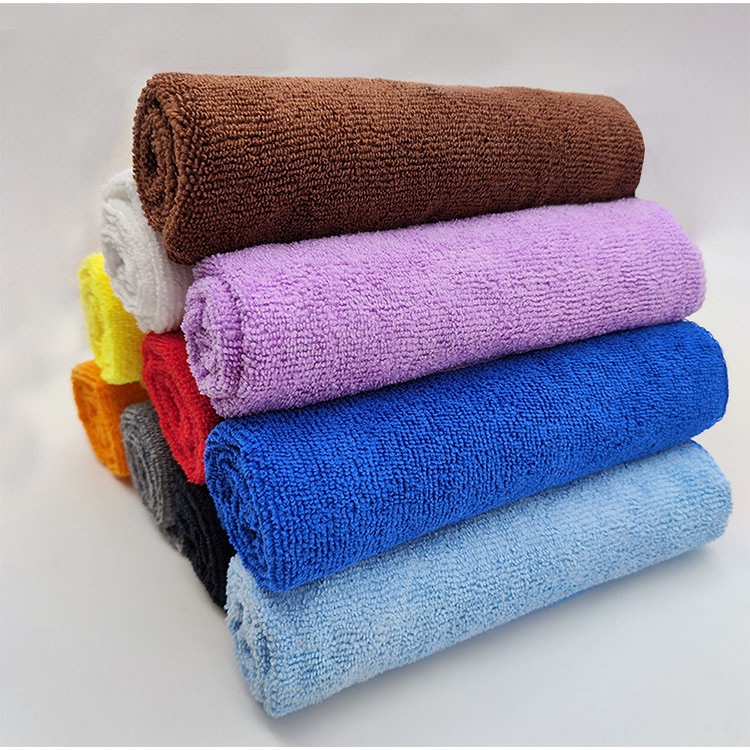
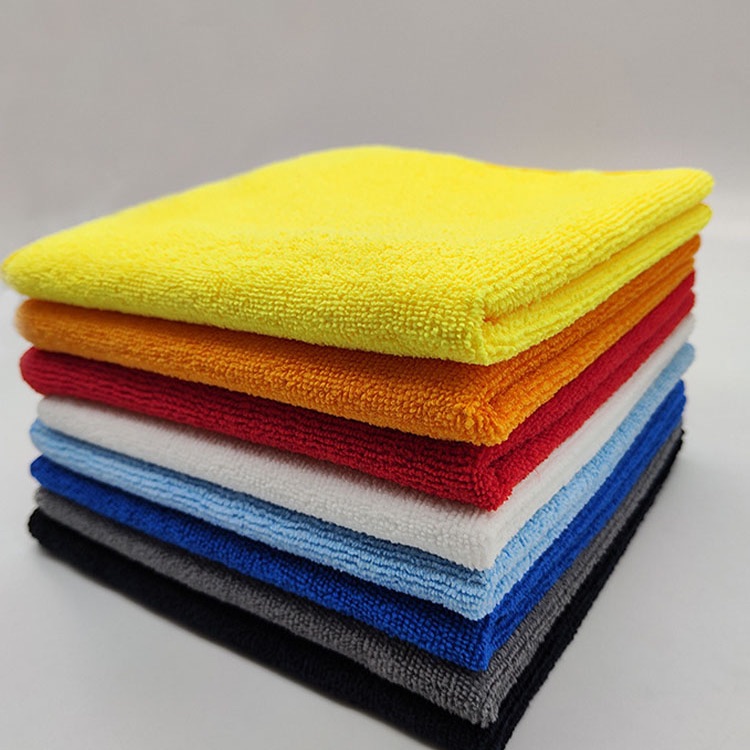
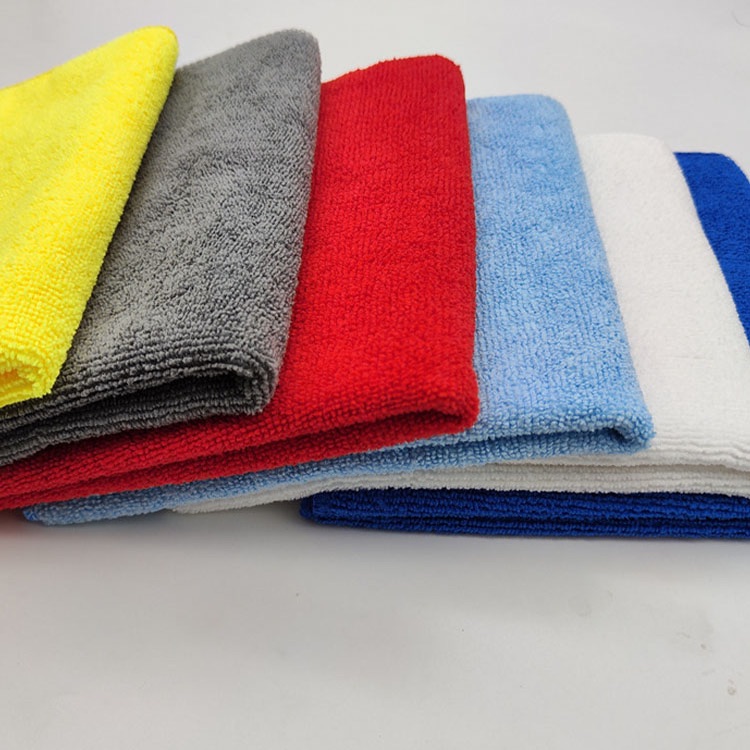
Use stock colors (black/gray/navy), or accept fewer colors in launch
Big reduction if you simplify colors
Less differentiation, tighter brand palette
Line changeover time (cut/sew + QC)
“MOQ per SKU”
Reduce SKU count: one size, one edge finish, one label location
Moderate
Slower product expansion
Custom packaging tooling
“MOQ 5,000 for color box / insert”
Start with polybag + label; upgrade packaging on reorder
Big
Your unboxing is less fancy at launch
Logo method (embroidery, woven label)
“Setup + MOQ”
Pay setup fees; limit logo placements; use heat transfer label
Moderate
Upfront cash, plus art control burden
Fabric/weave uniqueness
“Special fabric MOQ”
Launch with a standard weave (terry, waffle, twisted loop)
Moderate to big
You’re not “unique,” you’re reliable
Freight + consolidation risk
“MOQ to justify shipment”
Offer split shipments, longer lead time, or join their consolidation schedule
Small to moderate
Timing complexity on your side
Want a practical shortcut? Launch one SKU that factories already know how to make, then earn the right to get weird later.
If you’re building a car-care line, don’t invent a unicorn towel on day one. Start from an existing category (edgeless polishing, twisted loop drying) and negotiate around that base. The product grouping in car care microfiber towels for detailing programs makes this easy: you’re selecting a known manufacturing path, not commissioning experimental art.
If your SKU is glass/kitchen driven, waffle weave microfiber towels are a classic “standard spec” that many factories can run with less drama.
The “pay to cut MOQ” move (that founders avoid, and regret)
A 500-piece pilot run can be rational if you stop pretending the factory should subsidize your launch.
If the factory’s real issue is setup time, offer to pay setup explicitly:
screen/plate setup (if packaging print is involved)
embroidery digitizing
cutting marker setup
QC protocol alignment (AQL sampling expectations)
You’re basically buying down their risk. That’s normal. What’s not normal is expecting a factory to eat it because you’re “a new brand with potential.”
And yes, quality systems matter here. A factory that can describe QC checkpoints, AQL logic, and compliance workflows tends to be more flexible—because they’re running a process, not a chaos machine. The way this microfiber towel factory page frames documented QC and AQL-style acceptance sampling is exactly what you want to hear before you negotiate smaller runs.
Don’t ignore the two risks that quietly inflate MOQ: borders and microfibers
I’m going to be blunt: compliance is now a line item. Not a moral lecture—an invoice.
In May 2024, U.S. Customs and Border Protection said it stopped 450 shipments valued at more than $100 million for forced-labor examination. That is an expensive form of “surprise lead time.” If your supplier can’t produce clean documentation (materials, origin statements, test support where needed), they’ll often push MOQ up because they expect you to be a one-off buyer, not a repeat program.
Second risk: microfiber scrutiny is not “activist noise” anymore. In July 2024, NOAA’s Marine Debris Program announced the release of a Report to Congress on microfiber pollution (Save Our Seas 2.0 mandate), and EPA’s Trash Free Waters program publicly briefed it in webinars—meaning procurement teams are going to get questions about shedding, wash guidance, and product life. That matters for MOQ because “low-shedding” usually implies tighter construction and better finishing—often not compatible with tiny, highly customized runs.
So. Here’s the controversial take: your best MOQ negotiation tactic is to look like a boring, repeatable buyer—clean specs, clean paperwork, clean reorder logic.
A negotiation script that doesn’t make you sound broke
Use this structure. It works because it’s specific and it offers trades.
Step 1: Anchor with a “launch spec” and a “scale spec”
MOQ (minimum order quantity) in microfiber towel manufacturing is the smallest production run a factory will accept for one exact SKU—defined by weave, GSM, color, edge finish, logo method, and packaging—so it can cover dye-lot minimums, line changeover labor, QC checks, and export handling without pricing the job at a loss. After that definition, everything is negotiable: you either reduce complexity (fewer colors/SKUs), pay setup explicitly, or change timing (longer lead time, consolidation).
How do I negotiate MOQ with a microfiber towel supplier?
MOQ negotiation is the process of trading down a factory’s risk drivers—dye-lot weight, changeover time, packaging tooling minimums, and shipment consolidation—by offering specific concessions like stock colors, simplified packaging, setup fees, or longer lead times, while locking a repeatable spec so the factory expects profitable reorders. If you can name the constraint, you can design around it. If you can’t, you’ll get “MOQ is MOQ.”
What counts as a low MOQ microfiber towel supplier?
A low MOQ microfiber towel supplier is a manufacturer or supply partner willing to run small initial quantities (often hundreds to low thousands of pieces) by using stock fabric/colors, standardized weaves, minimal packaging, and paid setup—rather than treating every SKU as a custom production reset that requires large dye lots and dedicated line time. The catch: many “low MOQ” sellers are brokers; demand factory proof, QC language, and reorder controls.
Which specs raise microfiber towel MOQ the fastest?
The specs that raise microfiber towel MOQ fastest are those that force upstream minimums: custom colors (dye-lot kg), unique fabric constructions/weaves, special finishing (anti-bacterial treatments, coatings), and retail packaging with printed components that have their own minimum print runs, because each one adds setup time, supplier coordination, and rejection risk. If you want lower MOQ, launch with one standard weave, one color, and simple packaging, then add complexity later.
Can freight volatility affect MOQ negotiation?
Freight volatility affects MOQ negotiation by making factories and exporters prefer larger, simpler shipments that justify booking risk, documentation effort, and consolidation planning, especially when container rates swing sharply and transit times become less predictable on Asia–U.S./EU routes. That’s why “smaller MOQ” often gets paired with “longer lead time” or “ship when we consolidate.” If you accept that trade, you usually get the MOQ cut.
Microfiber towel manufacturer & factory for custom, OEM, and private label programs. Focused on repeatable B2B supply for USA & EU markets (plus selected Asian countries).