Most buyers stock too many travel towel sizes and still miss the one that actually moves. This post lays out the three-size mix that sells, the GSM bands that protect margin, and the internal product paths that fit the strategy.
They build travel towel assortments like a home-textile catalog, which looks polished in a sample room but falls apart once freight cost, shelf width, drying speed, carry-on pressure, and reorder behavior start doing what they always do: punish the oversized SKU and reward the disciplined one. Why are we still pretending a traveler shops like a resort guest?
Travel is back, and the packing math is harsher now: UN Tourism’s September 2024 World Tourism Barometer said the world recorded about 790 million international tourist arrivals in January-July 2024, up 11% year over year and already at 96% of 2019 levels, while the U.S. Department of Transportation’s April 2024 fee-disclosure rule said baggage-fee revenue had risen more than 30% between 2018 and 2022, and Reuters reported in July 2024 that U.S. airlines collected $7.1 billion in baggage fees in 2023. That is the real backdrop for “best travel towel size,” not some lazy lifestyle mood board.
Here’s my hard truth: buyers should stock three sizes, not seven. I have sat in too many sourcing calls where someone insists on 30 x 30 cm, 35 x 75 cm, 40 x 80 cm, 45 x 90 cm, 50 x 100 cm, 60 x 120 cm, and 70 x 140 cm as if more choice automatically means more revenue, when in practice it usually means slower replenishment, uglier MOQ conversations, and dead stock that never earns back the carton space. Want the clean version?
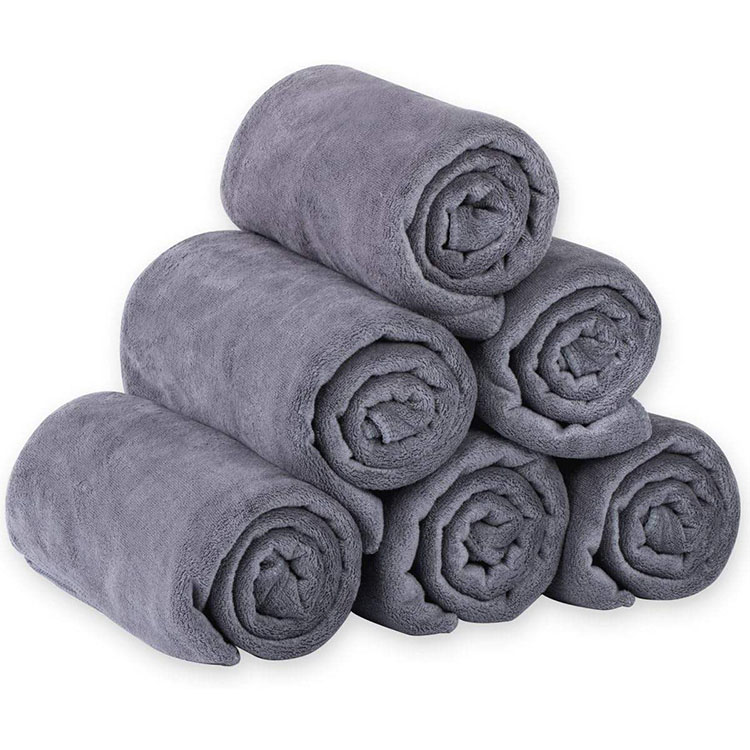
The first size is the compact seller: 40 x 80 cm. This is the format I would push for pack-light retail, gym add-ons, trail kits, event gifting, and “just in case” travel use, especially when paired with a pouch or hangtag-driven program like the site’s compact pocket towel option or the broader travel & outdoor microfiber towel range. Small towels work because they are cheap to test, easy to bundle, and psychologically low-risk for the buyer standing in front of a shelf.
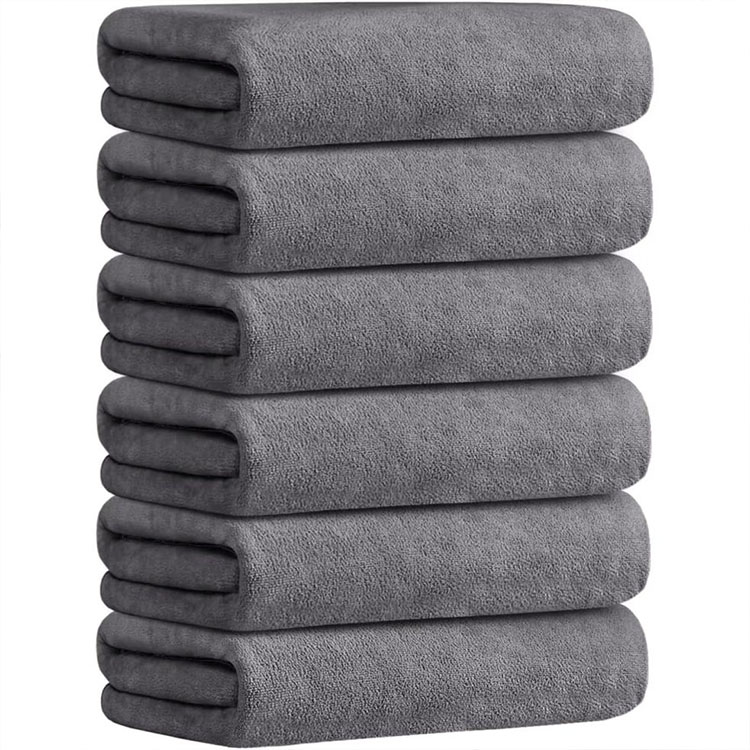
The second size is the money size: 60 x 120 cm. This is the one I would bet on for the majority of wholesale travel towels because it gives real body coverage without turning into luggage ballast, and it fits the promise already built into your fast-drying travel microfiber towels and travel quick-dry towel OEM options: light, quick-drying, travel-ready, and flexible on size/GSM. Most buyers overthink this. The medium size pays the bills.
The third size is the premium size: 70 x 140 cm. I would stock it, but I would not let it run the line. This is the camping, long-stay hostel, van-life, beach-crossover, and higher-ticket outdoor SKU, the one that earns its place when the consumer wants a “real towel” feel yet still expects microfiber behavior, and it sits naturally beside camping microfiber towels or premium boxed formats in the travel towel gift set collection. But larger than this? Usually vanity.
Size lies.
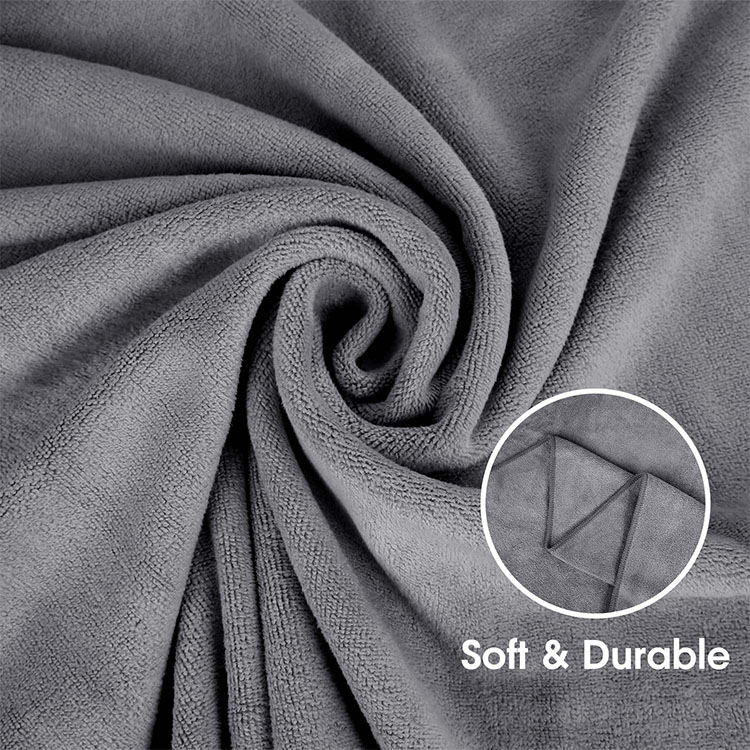
A 60 x 120 cm towel at 280 GSM is not a travel towel in any serious commercial sense; it is a bath towel wearing hiking boots, which is why I would keep compact units around 160-180 GSM, core body towels around 180-220 GSM, and premium large sizes around 200-240 GSM unless the brief explicitly says “softness over packability.” And yes, weave matters too: suede and waffle builds usually behave better for quick-dry positioning, while thicker terry-style builds can drift into slower-turn, heavier-pack territory if the spec team gets sentimental. Why sabotage your own travel claim with a towel that dries like a blanket?
The site itself already supports this spec-first logic. Your product pages repeatedly frame these travel towels around flexible size, GSM, packaging, and performance requirements, and the customization page leans into repeatable OEM/private-label programs rather than random one-off sampling, which is exactly how serious buyers should think about a microfiber travel towel line.
And here is the part too many factories still fudge: packaging changes the winning size. A naked towel on a bulk shelf can survive at 70 x 140 cm. A towel sold in a zip pouch, belly band, gift box, or insert-card retail pack usually gets more attractive at 40 x 80 cm or 60 x 120 cm, because the pack geometry stays cleaner, the freight cube stays saner, and the margin story stops bleeding. That is where travel towel gift sets and custom towel packaging become commercial tools, not decoration.
Sustainability matters too, but I do not buy the fake version. Slapping “eco” on an oversized towel that uses more material, more space, and more shipping volume is not smart sourcing; it is lazy copywriting. A better play is a tightly edited RPET travel towel program with clear size discipline, GRS-backed sourcing where needed, and realistic claims, especially for EU-facing accounts where the European Commission’s textile strategy is steering the market toward durable, recyclable, lower-impact textile products by 2030. rPET, for the record, means recycled polyethylene terephthalate, not marketing magic.
Stocking tier
Finished size
Inches
Recommended GSM
Best use case
Share of initial buy
Compact
40 x 80 cm
15.7 x 31.5 in
160-180 GSM
Daypack, gym, trail, promo, gift set
20-25%
Core
60 x 120 cm
23.6 x 47.2 in
180-220 GSM
General travel, hostel, camping, retail hero SKU
50-60%
Premium
70 x 140 cm
27.6 x 55.1 in
200-240 GSM
Long-stay travel, outdoor, beach crossover
15-25%
Special order only
80 x 160 cm+
31.5 x 63 in+
220-260 GSM+
Niche premium or resort crossover
0-5%
My view is blunt. The best travel towel size is not the biggest one that still fits a product photo. It is the size that protects the promise: fast drying, low bulk, decent coverage, clean packaging, lower freight pain, and obvious channel fit. For most brands, that means medium leads, small supports, large upgrades. The rest is noise.
FAQs
What is the best travel towel size for most buyers to stock? The best travel towel size for most buyers to stock is 60 x 120 cm because it gives near full-body coverage, still folds into a carry-on or daypack, works across hostel, camping, gym, and general retail channels, and usually delivers the cleanest balance of sell-through, freight cost, and drying speed. I would make this the lead SKU, then use 40 x 80 cm as the entry point and 70 x 140 cm as the premium step-up.
What size travel towel should I buy for a private-label launch? The right private-label starting mix is three sizes—40 x 80 cm, 60 x 120 cm, and 70 x 140 cm—because that spread covers compact, core, and premium demand without bloating the catalog with near-duplicate formats that confuse buyers, complicate MOQ planning, and dilute reorder velocity. New launches do better with a tighter line and clearer price ladder. I would rather see three sharp SKUs than six muddy ones.
Are microfiber travel towel sizes standardized? Microfiber travel towel sizes are not globally standardized, but the market tends to cluster around small, medium, and large finished formats that buyers recognize, with 40 x 80 cm, 60 x 120 cm, and 70 x 140 cm acting as the most commercially useful checkpoints for wholesale assortment planning. That is why finished-size strategy matters more than chasing arbitrary labels like S, M, and L. Buyers reorder dimensions, not adjectives.
Should buyers stock quick-dry and compact travel towels separately? Quick-dry travel towels and compact travel towels are related but not identical categories, because “quick-dry” describes performance while “compact” describes format, and the smartest wholesale lines use both ideas together by pairing low-bulk construction with a clearly defined finished size and travel-specific packaging. In practice, I would separate them by merchandising message, not by size chaos. A compact towel can be quick-dry; a quick-dry towel does not need five compact variants.
Microfiber towel manufacturer & factory for custom, OEM, and private label programs. Focused on repeatable B2B supply for USA & EU markets (plus selected Asian countries).